
Website Features Patients Expect
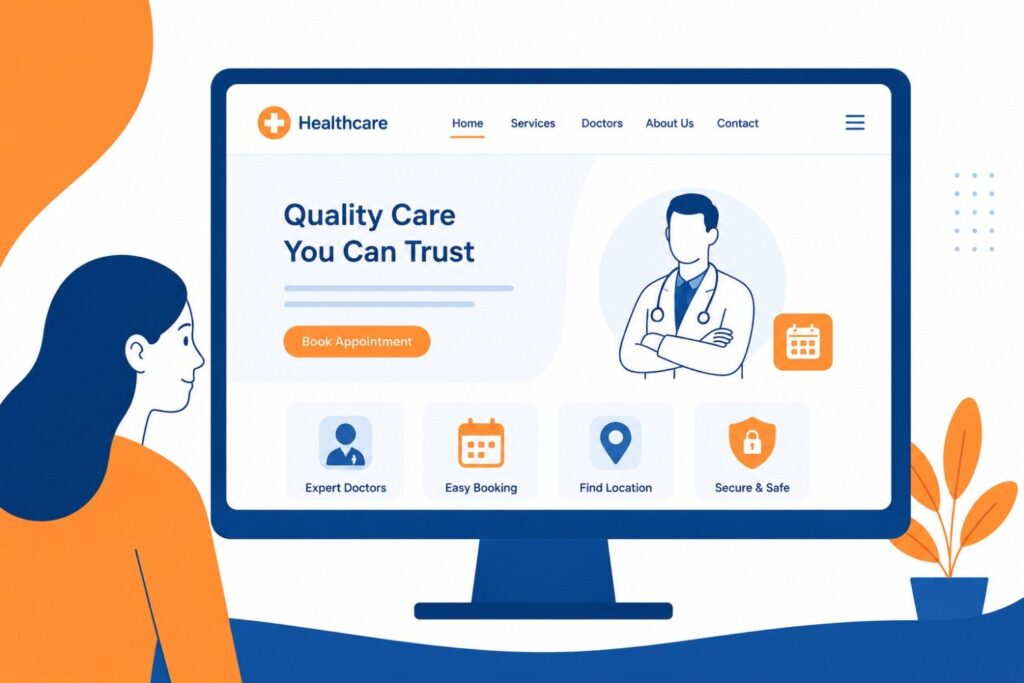
Patients increasingly use healthcare websites before deciding whether to contact a clinic, hospital, or doctor. The website features patients expect can directly influence how easily people find information, understand services, and take the next step. For healthcare providers in Kerala, a well-planned website can also support PERSONAL BRANDING FOR DOCTORS by presenting their expertise, qualifications, professional experience, and areas of specialization clearly.A healthcare website is no longer just an online brochure. It can act as a digital first point of contact where patients learn about doctors, treatments, departments, appointment options, facilities, and frequently asked questions.The right website features patients expect should make the experience simple, informative, accessible, and trustworthy. Patients should not have to search through several pages to find a phone number, doctor profile, consultation details, or appointment option.
What Are the Website Features Patients Expect?
The website features patients expect are the functions, information, and design elements that help visitors use a healthcare website comfortably and confidently.
These features can include:
- Clear navigation
- Doctor profiles
- Appointment booking
- Contact information
- Mobile-friendly design
- Treatment and service information
- Frequently asked questions
- Educational content
- Location and clinic details
- Fast page loading
- Secure forms
- Clear calls to action
The exact website features patients expect may differ according to the type of healthcare organization. A multispecialty hospital may need detailed department pages, while a dental clinic may focus more heavily on treatment information, doctor profiles, appointment booking, and patient education.
Why Do Website Features Patients Expect Matter?
A healthcare website often creates a first impression before a patient speaks with a staff member. If the website is confusing, slow, outdated, or difficult to use, visitors may leave before finding the information they need.
The website features patients expect help remove these barriers.
A useful website can help patients:
- Understand healthcare services
- Learn about doctors
- Find contact details quickly
- Request an appointment
- Read educational information
- Compare relevant treatment options
- Find clinic timings
- Understand what to expect
- Access the website from a smartphone
The goal is not to add every possible technology. Instead, healthcare organizations should prioritize the website features patients expect most frequently and present them clearly.
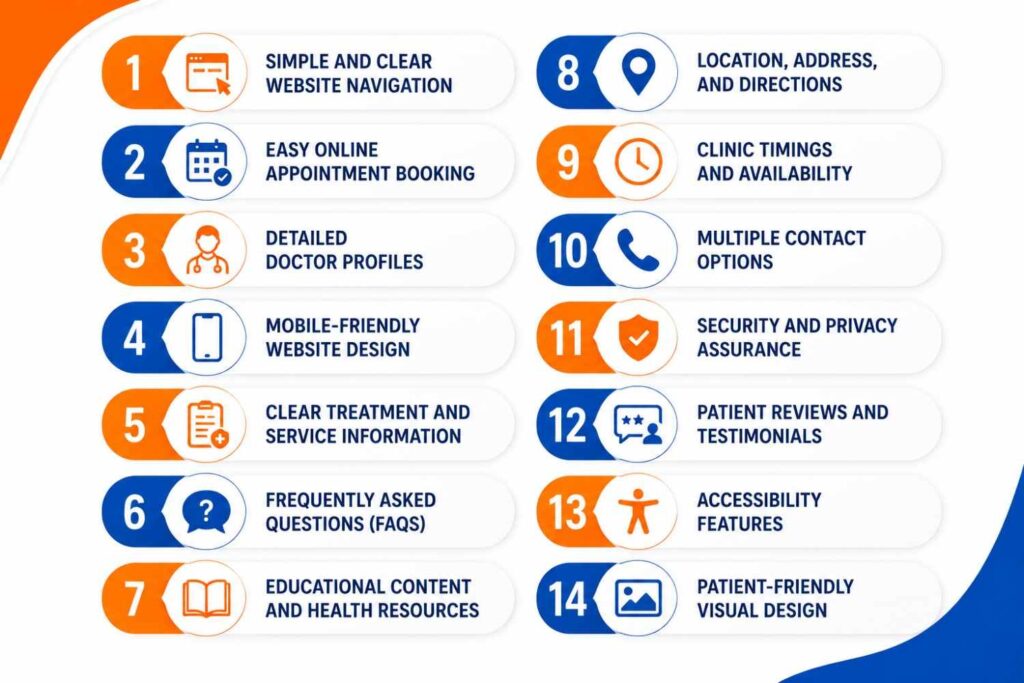
1. Simple and Clear Website Navigation
One of the most important website features patients expect is straightforward navigation.
Patients should immediately understand where to find:
- Doctors
- Departments
- Treatments
- Services
- About the clinic
- Contact information
- Appointment options
- Blog or health resources
A navigation menu should use familiar terms instead of complicated labels.
Why Navigation Matters
Healthcare websites can contain a large amount of information. Without clear navigation, visitors may become frustrated.
A simple menu helps users move from one page to another without repeatedly returning to the homepage.
The reference material similarly recommends clear headings, informative pages, descriptive titles, mobile-friendly design, and easy navigation as important website optimization elements.
2. Easy Online Appointment Booking
Online appointment booking is among the most practical website features patients expect today.
Patients should be able to understand how to schedule a consultation without making several phone calls.
A booking system may allow visitors to select:
- Doctor
- Department
- Consultation type
- Preferred date
- Preferred time
- Basic contact information
Keep the Booking Process Simple
An appointment form should not ask for unnecessary information.
A simple process can reduce hesitation and make it easier for visitors to complete the request.
The appointment button should also be visible on important pages instead of being hidden only on the contact page.
3. Detailed Doctor Profiles
Doctor profiles are another important part of the website features patients expect.
Patients often want to understand who will provide their care before making an appointment.
A useful doctor profile can include:
- Full name
- Specialty
- Qualifications
- Professional experience
- Areas of interest
- Clinical focus
- Professional memberships
- Educational background
- Relevant publications or professional activities
The reference material specifically identifies doctor biographies, qualifications, specializations, areas of interest, professional experience, educational resources, and clinic information as useful website components.
Build Trust Through Accurate Information
Doctor information should be factual and regularly updated.
Healthcare websites should avoid exaggerated statements such as “guaranteed results,” “100% success,” or unsupported claims of being the best. The source material also recommends avoiding exaggerated healthcare claims and keeping communication factual and responsible.
4. Mobile-Friendly Website Design
A large number of healthcare searches happen through smartphones. Therefore, responsive design is one of the website features patients expect from a modern healthcare website.
A mobile-friendly website should allow visitors to:
- Read text comfortably
- Tap buttons easily
- View doctor profiles
- Call the clinic
- Submit appointment forms
- Browse treatment pages
- Find directions
Why Mobile Experience Matters
A website that looks good on a desktop but becomes difficult to use on a phone can create unnecessary friction.
Buttons should be appropriately sized, text should remain readable, and important information should not be hidden behind complicated layouts.Mobile usability should be considered during the initial website design rather than added later.
5. Clear Treatment and Service Information
Patients want understandable information about the services a healthcare provider offers.
Treatment pages are therefore among the website features patients expect when researching healthcare options.
A treatment page can explain:
- What the treatment is
- Why it may be recommended
- How it is performed
- Who may be suitable
- General preparation
- Recovery information
- Frequently asked questions
- When professional consultation may be appropriate
Use Patient-Friendly Language
Medical terminology can sometimes be difficult for people without healthcare backgrounds.
The source material highlights the value of explaining healthcare topics in simple language so that patients can understand information before an appointment.
The best website features patients expect should therefore combine professional accuracy with easy-to-understand explanations.
6. Frequently Asked Questions
FAQs are another useful part of the website features patients expect.
Patients often have similar questions before contacting a healthcare provider.
An FAQ section can answer questions about:
- Consultation
- Appointment procedures
- Treatment preparation
- Recovery
- Clinic timings
- Documents to bring
- Payment processes
- Follow-up appointments
- General treatment information
FAQs can also reduce the amount of repetitive information staff members need to explain over the phone.
Keep FAQs Relevant
Do not create FAQs simply to add more text.Questions should reflect genuine patient concerns and should be answered accurately.
7. Educational Healthcare Content
Educational content is one of the most valuable website features patients expect from healthcare websites.
A healthcare website can include:
- Blog articles
- Health guides
- Treatment explanations
- Procedure information
- FAQs
- Awareness articles
- Preventive healthcare information
- Short educational videos
- Infographics
The reference content identifies blogs, short videos, FAQs, health awareness posts, procedure explanations, infographics, and educational social media posts as useful forms of healthcare education.Educational content can also support search engine visibility when it addresses relevant patient questions with accurate information.
8. Clear Contact Information
Simple contact access is one of the basic website features patients expect.
Important contact details should be easy to find.
A healthcare website should clearly display relevant information such as:
- Phone number
- Email address
- Clinic address
- Working hours
- Appointment information
- Emergency guidance where appropriate
- Directions or map information
Contact details should ideally appear in the header, footer, and contact page.
Make Contact Actions Easy
On mobile devices, a clickable phone number can make contacting the clinic much easier.Similarly, a visible appointment button can help visitors move from information to action without searching through the website.
9. Fast Website Loading
Website speed is another important part of the website features patients expect, even though it may not look like a traditional feature.Patients do not want to wait several seconds for a doctor profile, treatment page, or appointment form to load.
Slow websites can result from:
- Large image files
- Excessive animations
- Poor hosting
- Unnecessary plugins
- Unoptimized scripts
- Poor website development practices
Improve Website Performance
Healthcare organizations can improve performance by:
- Compressing images
- Using appropriate image formats
- Reducing unnecessary scripts
- Optimizing website code
- Using reliable hosting
- Removing unused plugins
- Monitoring page performance
A fast website creates a smoother patient experience and can also support broader technical SEO efforts.
10. Search Functionality
A search feature becomes especially useful for large hospitals and healthcare websites.
Patients may search for terms such as:
- Doctor names
- Departments
- Treatments
- Conditions
- Procedures
- Blog topics
- Locations
Without website search, visitors may have to navigate through multiple menus.A well-designed search function can help users quickly reach the information they need.
11. Secure Patient Forms
Security is another important consideration among the website features patients expect.
Healthcare websites may include forms for:
- Appointment requests
- Contact inquiries
- Callback requests
- General information requests
Forms should collect only necessary information and should be handled responsibly.
Protect Patient Information
Healthcare providers should consider appropriate security practices, secure connections, access controls, and responsible data handling.The website should also clearly communicate how submitted information is used when appropriate.
12. Clear Calls to Action
A call to action tells the visitor what they can do next.
Examples include:
- Book an Appointment
- Contact the Clinic
- Meet Our Doctors
- Explore Treatments
- Request a Consultation
- Call Now
- Learn More
Clear calls to action are among the website features patients expect because visitors often need guidance after reading a page.The CTA should match the page.For example, a doctor profile can include “Book an Appointment,” while an educational article can direct readers toward a relevant treatment page or consultation option.
13. Location and Direction Information
Patients need to know where the clinic or hospital is located.
Useful location information can include:
- Complete address
- Nearby landmarks
- Map
- Parking information
- Public transportation guidance
- Building or floor details when relevant
Location information should be easy to access from both desktop and mobile devices.
14. Patient-Friendly Visual Design
Design is another important component of the website features patients expect.A healthcare website should look professional without becoming overly complicated.
Useful design principles include:
- Clean layouts
- Readable fonts
- Consistent colors
- High-quality professional photographs
- Clear spacing
- Simple icons where appropriate
- Consistent buttons
- Logical page structures
The reference content also highlights consistent visual identity, including professional photographs, typography, design elements, and presentation.
Types of Website Features Patients Expect
The website features patients expect can be grouped into several categories.
Informational Features
These help patients learn:
- Doctor profiles
- Treatment pages
- Department information
- FAQs
- Health blogs
- Educational videos
Communication Features
These help patients contact providers:
- Phone buttons
- Contact forms
- Appointment requests
- Callback forms
Navigation Features
These help visitors move through the website:
- Search
- Menus
- Breadcrumbs
- Internal links
- Clear calls to action
Technical Features
These improve usability:
- Mobile responsiveness
- Fast loading
- Secure connections
- Accessible design
- Reliable forms
Benefits of Providing the Website Features Patients Expect
Investing in the right website features patients expect can create several practical benefits.
- Better Patient Experience
Visitors can find information without unnecessary effort.
- Improved Communication
Clear contact and appointment options make it easier for patients to connect with healthcare providers.
- Greater Online Visibility
Useful website content can support search engine visibility.The reference material notes that SEO can help patients discover a doctor’s website when searching for relevant healthcare information.
- Stronger Professional Presentation
A well-organized website can communicate qualifications, expertise, services, and educational information in a consistent manner.
- Better Patient Education
Treatment pages, FAQs, and health articles can help visitors understand healthcare topics before a consultation.
Common Problems With Healthcare Websites
Even when organizations understand the website features patients expect, implementation can sometimes be incomplete.
Common problems include:
- Outdated doctor profiles
- Difficult navigation
- Missing appointment buttons
- Slow loading pages
- Poor mobile layouts
- Excessive medical jargon
- Incomplete contact information
- Old blog content
- Broken forms
- Overly promotional messaging
These issues can reduce the usefulness of an otherwise professional website.
Are These Website Features Patients Expect the Same for Every Healthcare Provider?
No. The website features patients expect depend on the organization.
A dental clinic may prioritize:
- Dentist profiles
- Dental treatments
- Appointment booking
- Before-and-after information where appropriate
- FAQs
A hospital may need:
- Multiple departments
- Doctor directories
- Diagnostic services
- Patient resources
- Appointment systems
- Facility information
A specialist clinic may focus more on:
- Specialist biography
- Treatment education
- Procedure information
- FAQs
- Consultation booking
The goal is to identify the features most relevant to the patients who use the website.
How SEO Supports Website Features Patients Expect
SEO and website usability should work together.
A healthcare website may have excellent design, but patients still need to discover it through search engines.
Useful SEO practices include:
- Search-friendly page titles
- Descriptive URLs
- Clear headings
- Relevant keywords
- Internal linking
- Helpful educational content
- Mobile-friendly pages
- Optimized images
- Structured content
The source material also recommends descriptive titles, relevant keywords, clear headings, mobile-friendly design, and easy navigation when optimizing a healthcare website.
SEO should not result in keyword stuffing. Content should remain natural and useful.
Conclusion
The website features patients expect are centered on one simple goal: making healthcare information easier to find, understand, and use. Clear navigation, doctor profiles, treatment information, appointment booking, mobile-friendly design, FAQs, educational content, contact options, website speed, and secure forms can create a more useful digital experience.A healthcare website should not simply look professional. It should answer patient questions, provide accurate information, support communication, and guide visitors toward appropriate next steps.By prioritizing the website features patients expect, healthcare providers can build a digital presence that is informative, accessible, patient-focused, and aligned with modern online behavior..For more information about search engine optimization best practices, visit Google’s SEO Starter Guide.

