
10 Proven Methods for a Strong Healthcare Marketing Strategy
A well-planned healthcare marketing strategy helps doctors, clinics, hospitals, diagnostic centres, and wellness organisations connect with patients who are actively looking for reliable healthcare information. In a competitive market such as Kerala, simply offering quality medical care may not be enough to attract attention online. Healthcare providers also need a clear digital presence that communicates their expertise, services, location, values, and approach to patient care.
Patients now use search engines, maps, websites, reviews, videos, and social media before contacting a healthcare provider. A structured healthcare marketing strategy helps ensure that the right information appears during each stage of this decision-making process.
What Is a Healthcare Marketing Strategy?
A healthcare marketing strategy is a structured plan used to promote healthcare services, educate patients, improve digital visibility, and support sustainable practice growth.
It defines:
- Who the target patients are
- Which healthcare services need visibility
- What information patients are searching for
- Which digital channels should be used
- How the healthcare brand should communicate
- Which results should be measured
- How campaigns should be improved over time
Unlike ordinary commercial advertising, healthcare communication must be accurate, responsible, sensitive, and patient-focused. It should help people understand healthcare services without making unrealistic promises or creating unnecessary fear.
A complete healthcare marketing strategy may combine medical SEO, website development, local search optimisation, content marketing, social media, online reputation management, video marketing, paid advertising, and performance tracking.
Why Healthcare Providers Need a Clear Marketing Plan
Patients have more choices than ever. They may compare several doctors or clinics before making an appointment.
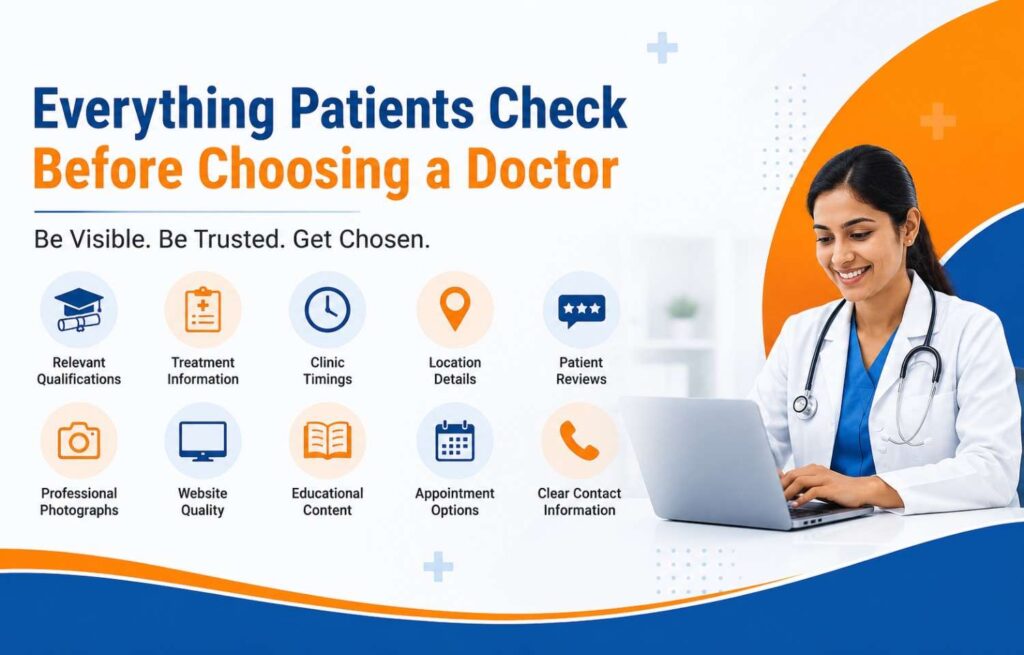
They often look for:
- Relevant qualifications
- Treatment information
- Clinic timings
- Location details
- Patient reviews
- Professional photographs
- Website quality
- Educational content
- Appointment options
- Clear contact information
Without a consistent healthcare marketing strategy, important services may remain difficult to find online. The healthcare provider may also communicate different messages across the website, social platforms, directories, and advertisements.
A planned approach creates consistency and helps every digital platform support the same objectives.
Common Causes of Weak Healthcare Marketing Results
Many healthcare organisations invest in digital marketing but do not achieve meaningful results. This usually happens because individual activities are carried out without a connected healthcare marketing strategy.
Lack of Clear Goals
A healthcare campaign cannot be properly evaluated when there is no defined goal.
Possible goals may include:
- Increasing appointment enquiries
- Improving local Google visibility
- Promoting a new specialty
- Building awareness around a treatment
- Increasing website traffic
- Improving patient education
- Strengthening the doctor’s professional identity
Each objective requires a different approach, message, platform, and performance metric.
Poor Understanding of the Target Audience
A general message may not connect with every patient.
A paediatric clinic, dental practice, fertility centre, diagnostic laboratory, and multispecialty hospital serve different audiences. Their patients may have different concerns, search habits, age groups, locations, and information needs.
An effective healthcare marketing strategy begins by understanding these differences.
Inconsistent Online Information
Patients may lose confidence when clinic details are different across platforms.
Common inconsistencies include:
- Different phone numbers
- Incorrect working hours
- Old clinic addresses
- Outdated doctor profiles
- Missing service information
- Inconsistent clinic names
Accurate information is an essential part of both patient experience and local SEO.
Weak Website Experience
A slow or confusing website can reduce enquiries even when it receives traffic.
Problems may include:
- Difficult navigation
- Poor mobile display
- Long paragraphs
- Missing appointment buttons
- Unclear service pages
- Slow loading speed
- Outdated design
- Technical errors
The website should be the central platform within a healthcare marketing strategy.
Irregular Content Publishing
Publishing a few blogs or social posts without a schedule rarely builds strong visibility.
Healthcare content requires consistency. It should answer real patient questions, support treatment pages, improve search coverage, and strengthen professional authority over time.
Focusing Only on Followers or Traffic
Website visits and social media followers can be useful indicators, but they do not always represent patient interest.
A strong healthcare marketing strategy measures meaningful actions such as:
- Calls
- Appointment form submissions
- Direction requests
- Chat clicks
- Qualified enquiries
- Returning visitors
- Search visibility for relevant treatments
Warning Signs That a Healthcare Marketing Strategy Needs Improvement
Healthcare organisations should review their approach when digital performance remains weak for a long period.
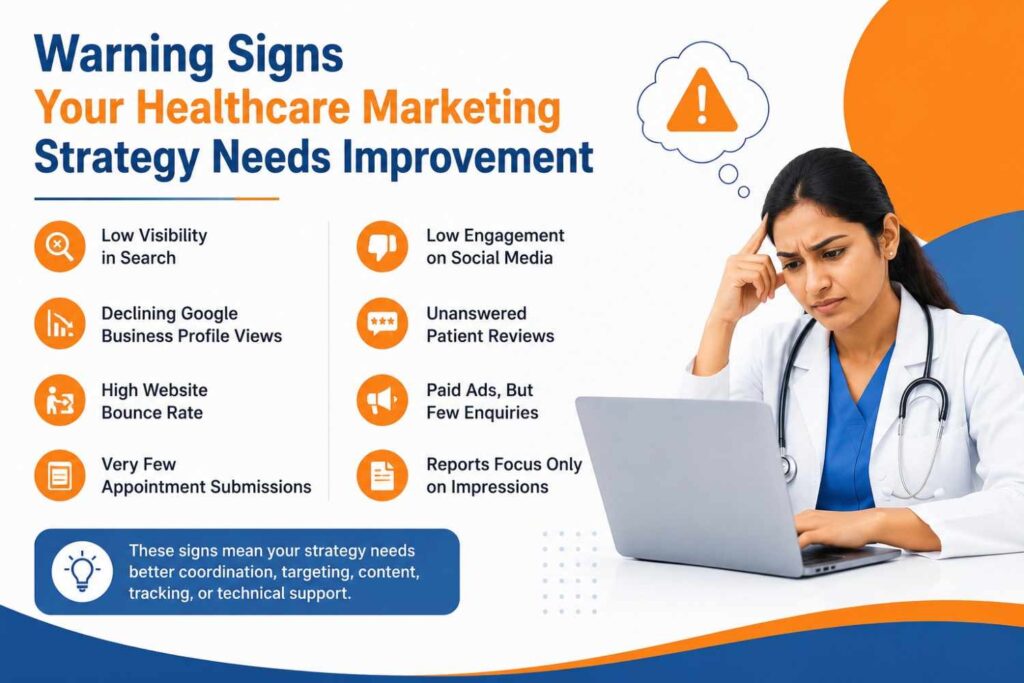
Common warning signs include:
- The website does not appear for important service searches
- Google Business Profile views are declining
- Website visitors leave quickly
- Appointment forms receive very few submissions
- Social media posts receive little relevant engagement
- Patients cannot easily find clinic information
- Reviews are left unanswered
- Paid campaigns generate clicks but few enquiries
- Different platforms use inconsistent branding
- Content does not answer common patient questions
- Website pages compete for the same keyword
- Marketing reports focus only on impressions
These signs do not always mean that every activity has failed. They usually indicate that the healthcare marketing strategy needs better coordination, targeting, content, tracking, or technical support.
Types of Healthcare Marketing Strategy
There is no single marketing method that suits every healthcare organisation. The right approach depends on the specialty, location, competition, audience, available resources, and growth goals.
1. Search Engine Optimisation Strategy
Medical SEO improves a healthcare website’s visibility for relevant searches.
It may include:
- Healthcare keyword research
- Treatment-page optimisation
- Technical SEO
- Internal linking
- Local keyword targeting
- Medical blog development
- Metadata optimisation
- Image optimisation
- Website speed improvements
- Search performance monitoring
SEO is especially valuable because it reaches people who are already searching for a doctor, clinic, treatment, test, or healthcare service.
2. Local Healthcare Marketing Strategy
Local marketing helps nearby patients find healthcare providers through search engines and maps.
Important activities include:
- Google Business Profile optimisation
- Correct name, address, and phone details
- Local service pages
- Location-based keywords
- Review management
- Clinic photographs
- Regular profile updates
- Map visibility monitoring
- Local directory consistency
A local healthcare marketing strategy is particularly important for clinics, dental practices, laboratories, physiotherapy centres, and specialty consultation services.
3. Healthcare Content Marketing Strategy
Content marketing uses useful information to answer patient questions and support informed decision-making.
Content formats may include:
- Treatment pages
- Condition guides
- Medical blogs
- Frequently asked questions
- Doctor profiles
- Recovery information
- Preventive-care articles
- Patient checklists
- Infographics
- Newsletters
Content should remain medically responsible and easy to understand. It should never replace personal consultation or provide misleading guarantees.
4. Social Media Marketing Strategy
Social media can help healthcare providers remain visible and communicate regularly with their audience.
A social media healthcare marketing strategy may include:
- Awareness posts
- Doctor introduction posts
- Health education
- Clinic updates
- Frequently asked questions
- Short videos
- Preventive-care tips
- Event updates
- Service explanations
- Community messages
The purpose should not be constant promotion. A balanced content plan combines education, trust, accessibility, and professional communication.
5. Paid Healthcare Advertising Strategy
Paid campaigns can create quicker visibility for selected services.
Common platforms include:
- Google Search Ads
- Google Display Ads
- Meta advertising
- Video advertising
- Remarketing campaigns
Paid advertising should use clear targeting and carefully reviewed language. Campaigns must also comply with platform rules and applicable healthcare advertising standards.
6. Reputation Management Strategy
Online reputation influences patient confidence.
A reputation-focused healthcare marketing strategy may include:
- Monitoring reviews
- Responding professionally
- Correcting inaccurate profile information
- Encouraging genuine patient feedback through appropriate methods
- Tracking common concerns
- Improving communication based on feedback
Review responses should protect patient privacy and avoid discussing personal medical details publicly.
7. Doctor Branding Strategy
Doctor branding communicates professional identity, experience, specialty, values, and approach to care.
It may include:
- A detailed doctor profile
- Professional photography
- Educational articles
- Introduction videos
- Consistent visual presentation
- Media contributions
- Specialty-focused content
- Public awareness communication
Professional branding should be based on accurate information rather than exaggerated claims.
10 Proven Methods for an Effective Healthcare Marketing Strategy
1. Set Clear and Measurable Goals
Begin by identifying what the organisation wants to achieve.
Instead of using a broad goal such as “increase online presence,” define a measurable objective.
Examples include:
- Increase qualified appointment enquiries
- Improve rankings for selected treatment keywords
- Increase calls from Google Business Profile
- Build awareness for a newly introduced service
- Improve engagement with patient education content
- Increase visits to important specialty pages
Clear goals make the healthcare marketing strategy easier to implement and assess.
2. Understand the Patient Journey
Patients do not always book an appointment immediately after seeing one advertisement or website page.
Their journey may include:
- Recognising a healthcare concern
- Searching for basic information
- Comparing treatment options
- Looking for doctors or clinics
- Reading reviews
- Checking qualifications and facilities
- Contacting the healthcare provider
- Attending the consultation
- Returning for follow-up care
Marketing content should support patients at each stage without pressuring them.
3. Build a Patient-Friendly Website
The website should make important information easy to find.
Essential elements include:
- Mobile-friendly design
- Secure browsing
- Fast loading
- Clear service categories
- Individual treatment pages
- Doctor profiles
- Clinic timings
- Contact information
- Map integration
- Appointment enquiry options
- Frequently asked questions
- Privacy information
A well-structured website improves the overall performance of the healthcare marketing strategy because SEO, paid campaigns, social media, and local listings can direct users to relevant pages.
4. Create Dedicated Service Pages
A single page listing every service may not provide enough information for patients or search engines.
Important treatments and specialties should have separate pages explaining:
- What the service is
- Who may require it
- How assessment is performed
- Available approaches
- What patients may expect
- Frequently asked questions
- When to seek professional advice
Each page should focus on one main search topic and avoid unnecessary repetition.
5. Use Ethical Medical SEO
Medical SEO should improve accessibility without sacrificing accuracy.
A responsible SEO approach includes:
- Selecting relevant keywords
- Matching content with user intent
- Using natural language
- Avoiding keyword stuffing
- Providing medically reviewed information
- Improving internal links
- Updating outdated pages
- Creating useful metadata
- Optimising technical performance
A successful healthcare marketing strategy uses SEO to make reliable information easier to discover.
6. Optimise the Google Business Profile
Google Business Profile can directly influence calls, direction requests, website visits, and local enquiries.
The profile should contain:
- Correct clinic name
- Accurate address
- Updated phone number
- Current working hours
- Relevant business category
- Service information
- Professional photographs
- Website link
- Appointment link where applicable
- Regular updates
Reviews should be monitored and answered politely. Responses should remain general to protect patient confidentiality.
7. Publish Useful Patient-Education Content
Healthcare content should answer genuine questions rather than repeatedly promote services.
Useful topics may include:
- Early signs that require medical attention
- How diagnostic tests work
- Questions to ask during consultation
- Preparing for an appointment
- Treatment options
- Recovery guidance
- Preventive-care information
- Myths and facts
- Follow-up care
- Lifestyle support
Patient education strengthens trust and provides search engines with a clearer understanding of the website’s subject expertise.
8. Maintain Consistent Branding and Communication
Patients should receive a similar experience across the website, social media pages, online listings, advertisements, and printed materials.
Consistency includes:
- Clinic name
- Logo usage
- Colour palette
- Tone of communication
- Doctor information
- Service descriptions
- Contact details
- Photography style
Consistency makes the healthcare marketing strategy more recognisable and professional.
9. Track Meaningful Performance Metrics
Marketing should be evaluated using data connected to actual objectives.
Useful measurements include:
- Organic search impressions
- Keyword rankings
- Website clicks
- Calls
- Appointment submissions
- Chat enquiries
- Direction requests
- Conversion rate
- Cost per enquiry
- Engagement with important pages
- Returning website visitors
- Local profile actions
Reports should explain what changed, why it may have changed, and what action should be taken next.
10. Improve the Strategy Continuously
Digital behaviour, competition, search algorithms, patient expectations, and platform policies can change.
A healthcare marketing strategy should therefore be reviewed regularly.
Continuous improvement may include:
- Updating older content
- Testing appointment buttons
- Improving page speed
- adding common patient questions
- Refining advertising keywords
- Removing irrelevant search terms
- Improving mobile usability
- Updating clinic photographs
- Reviewing underperforming pages
- Strengthening internal links
Marketing becomes more effective when decisions are based on performance data rather than assumptions.
Benefits of a Healthcare Marketing Strategy
- Improved Online Visibility
- Better Patient Education
- Stronger Professional Trust
- More Relevant Enquiries
- Consistent Brand Presentation
- Better Use of Marketing Resources
- Sustainable Practice Growth
Solutions for Underperforming Healthcare Marketing
When marketing does not produce the expected results, the solution is not always to increase advertising expenditure.
The organisation may first need to:
- Audit the website
- Review keyword targeting
- Correct local listings
- Improve service-page quality
- Simplify appointment forms
- Update doctor profiles
- Strengthen mobile usability
- Review ad search terms
- Improve call tracking
- Publish better educational content
- Respond to reviews
- Clarify the target audience
The right solution depends on the actual weakness within the healthcare marketing strategy.
Conclusion
A successful healthcare marketing strategy is not based on a single advertisement, social media post, or website page. It is a coordinated system that connects patient research, accurate medical content, SEO, local visibility, branding, reputation, website experience, and performance measurement.
Healthcare providers should begin with clear goals, understand their audience, create useful information, and make appointment pathways easy to follow. Regular analysis then helps identify which activities are producing meaningful patient engagement.
For doctors, clinics, and hospitals serving patients in Kerala, an ethical and consistent healthcare marketing strategy can improve digital accessibility, strengthen professional credibility, and support sustainable growth while keeping patient education and responsible communication at the centre of every campaign.
To learn more about improving your website’s visibility on Google, visit Google SEO Starter Guide.

