
Understanding How Healthcare Marketing Works to Attract, Engage, and Retain Patients

The healthcare industry has experienced a major digital transformation over the past decade. Patients no longer rely solely on referrals from friends and family when choosing a doctor or healthcare provider. Instead, they search online, compare clinics, read patient reviews, explore treatment pages, and visit websites before making a healthcare decision. Understanding How Healthcare Marketing Works is essential for healthcare providers who want to connect with these patients and build a strong online presence.
How Healthcare Marketing Works is through a combination of digital strategies that increase visibility, educate patients, establish trust, and encourage appointment enquiries. Rather than focusing on traditional advertising alone, healthcare marketing creates meaningful patient experiences across multiple digital channels, including search engines, websites, social media, online reviews, content marketing, and local search optimization. This guide explains How Healthcare Marketing Works and why an integrated digital strategy helps healthcare practices achieve sustainable growth.
What is Healthcare Marketing?
Healthcare marketing is the process of promoting healthcare services through ethical, educational, and patient-focused digital strategies. It enables healthcare providers to communicate with existing and potential patients while improving visibility and accessibility.
Modern healthcare marketing includes:
- Search Engine Optimization (SEO)
- Content Marketing
- Website Development
- Social Media Marketing
- Google Business Profile Optimization
- Paid Advertising
- Reputation Management
- Healthcare Branding
- Video Marketing
- Performance Analytics
Understanding How Healthcare Marketing Works begins with recognizing that every marketing channel contributes to a better patient experience.
Why Healthcare Marketing is Important
Patients expect healthcare providers to maintain an informative digital presence.
A strong marketing strategy helps providers:
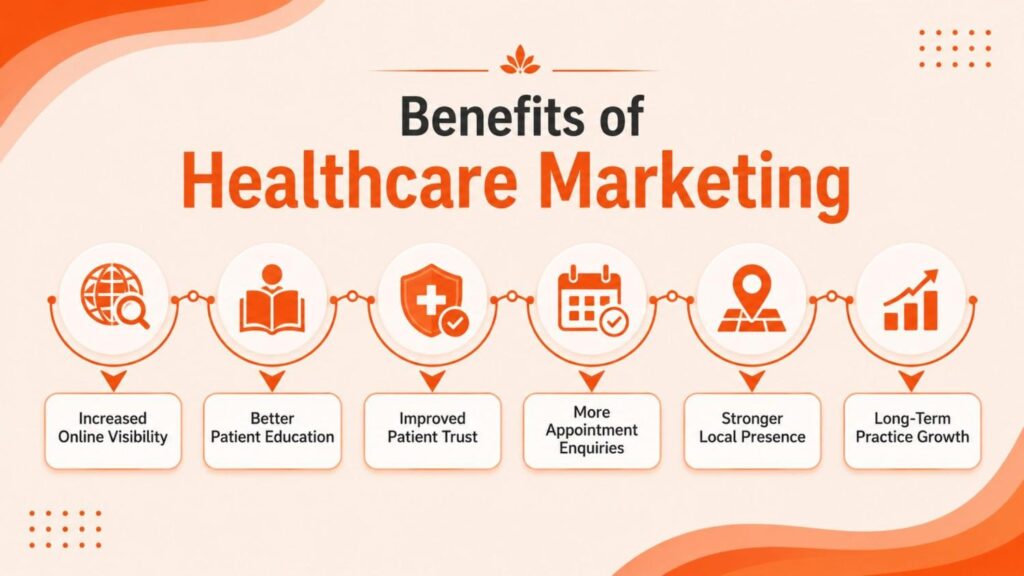
- Improve online visibility
- Build patient trust
- Increase appointment enquiries
- Strengthen reputation
- Educate patients
- Improve local search rankings
- Support long-term growth
Healthcare marketing allows providers to reach patients at every stage of their healthcare journey.
How Healthcare Marketing Works
Successful healthcare marketing follows a structured process rather than relying on a single promotional activity.
Each strategy supports another, creating a complete patient acquisition and retention system.
The process typically involves:
- Understanding patient needs
- Building an optimized website
- Improving search visibility
- Publishing educational content
- Maintaining social media activity
- Optimizing local search
- Managing online reviews
- Running advertising campaigns
- Monitoring results
- Continuous improvement
This integrated approach demonstrates How Healthcare Marketing Works to generate consistent online growth.
Step 1 – Understanding the Target Audience
Every successful healthcare marketing campaign starts by understanding patients.
Important factors include:
- Age group
- Location
- Healthcare concerns
- Search behaviour
- Preferred communication channels
- Treatment interests
Understanding the audience allows healthcare providers to create relevant marketing campaigns that answer patient questions.
Step 2 – Building a Professional Website
A healthcare website serves as the digital foundation of every marketing strategy.
An effective website should include:
- Mobile-friendly design
- Fast loading speed
- Secure browsing
- Doctor profiles
- Treatment pages
- Appointment forms
- Contact information
- Educational blog section
- Patient testimonials
A professional website builds confidence before patients schedule an appointment.
Step 3 – Improving Search Engine Visibility
Search Engine Optimization (SEO) helps healthcare providers appear in Google search results.
SEO activities include:
- Keyword research
- On-page optimization
- Technical SEO
- Internal linking
- Blog optimization
- Local keyword targeting
SEO explains an important part of How Healthcare Marketing Works, because patients often begin their healthcare journey through search engines.
Step 4 – Creating Educational Content
Educational content helps patients understand medical conditions, treatments, and preventive care.
Examples include:
- Medical blogs
- Treatment pages
- Service pages
- FAQs
- Infographics
- Patient education guides
- Healthcare articles
Quality content increases trust while improving organic search visibility.
Step 5 – Using Social Media Effectively
Social media allows healthcare providers to maintain regular communication with patients.
Popular platforms include:
- YouTube
Healthcare content may include:
- Health awareness campaigns
- Wellness tips
- Doctor introductions
- Clinic updates
- Educational videos
- Frequently asked questions
Consistent engagement strengthens relationships with patients.
Step 6 – Optimizing Google Business Profile
Many patients search for nearby healthcare providers using Google Maps.
Optimization includes:
- Clinic information
- Business hours
- Professional images
- Patient reviews
- Service listings
- Business updates
An optimized profile improves local visibility and increases appointment enquiries.
Step 7 – Managing Online Reputation
Patients often read reviews before selecting a healthcare provider.
Reputation management involves:
- Monitoring reviews
- Responding professionally
- Encouraging patient feedback
- Addressing concerns
- Maintaining transparency
Positive reviews help build credibility and trust.
Step 8 – Running Paid Advertising Campaigns
Paid advertising provides faster visibility for healthcare providers.
Popular platforms include:
- Google Ads
- Meta Ads
- YouTube Ads
- Display Advertising
- Remarketing Campaigns
Paid campaigns can promote:
- Specialty treatments
- New clinics
- Awareness campaigns
- Health camps
- Preventive care services
Advertising works best when combined with SEO and content marketing.
Step 9 – Measuring Marketing Performance
Healthcare marketing should be continuously monitored.
Important performance indicators include:
- Website traffic
- Search rankings
- Patient enquiries
- Conversion rates
- Social media engagement
- Google Business Profile interactions
- Return on investment
Performance analysis helps improve future campaigns.
Common Mistakes to Avoid
Healthcare providers should avoid:
- Ignoring SEO
- Publishing poor-quality content
- Inconsistent branding
- Outdated websites
- Neglecting online reviews
- Irregular social media activity
- Lack of performance monitoring
- Focusing only on paid advertising
Avoiding these mistakes improves long-term marketing success.
How Different Marketing Channels Work Together
Healthcare marketing is most effective when every channel supports the others.
For example:
- SEO helps patients discover the website.
- Content answers patient questions.
- Social media builds engagement.
- Google Business Profile improves local visibility.
- Paid advertising increases immediate reach.
- Reputation management builds trust.
- Analytics measure campaign performance.
Together, these strategies demonstrate How Healthcare Marketing Works to create a seamless patient journey. Understanding how Healthcare Marketing works is only one part of building a successful digital presence. To explore a complete healthcare marketing strategy, including SEO, social media management, website optimization, content marketing, branding, and local search strategies tailored for medical professionals, read our comprehensive guide on Healthcare Marketing.
The Future of Healthcare Marketing
Healthcare marketing continues evolving alongside technology.
Emerging trends include:
- Artificial Intelligence
- Voice Search
- Personalized Marketing
- Video-First Content
- Interactive Patient Education
- Marketing Automation
- Predictive Analytics
- Enhanced Local SEO
Healthcare providers who embrace these innovations will remain competitive.
Conclusion
Understanding How Healthcare Marketing Works enables healthcare providers to build stronger relationships with patients while improving online visibility and long-term practice growth. Rather than relying on a single marketing activity, successful healthcare marketing integrates SEO, educational content, website optimization, social media, local search optimization, paid advertising, and reputation management into one cohesive strategy.
When implemented consistently, How Healthcare Marketing Works becomes a structured process that attracts the right audience, builds credibility, and encourages patient engagement throughout the healthcare journey. Healthcare providers who invest in ethical, patient-centered digital marketing are better positioned to strengthen their reputation, increase qualified enquiries, and achieve sustainable growth in an increasingly competitive healthcare landscape. For additional information, explore the Health Literacy Resources from the U.S. Department of Health & Human Services to understand how effective communication helps healthcare organizations connect with and educate patients.

