
HOW PATIENTS CHOOSE DOCTORS ONLINE
Choosing a doctor is no longer limited to asking friends or visiting the nearest clinic. Today, HOW PATIENTS CHOOSE DOCTORS ONLINE has become an important part of healthcare decision-making, including for people searching for reliable medical professionals in Kerala. Before booking an appointment, patients may search a doctor’s name, read the website, check qualifications, compare specialties, look at reviews, and explore educational content.
The online experience can influence whether a patient feels comfortable taking the next step. A professional digital presence does not replace medical expertise, but it can make accurate professional information easier to find and understand.
Why Patients Search for Doctors Online
Healthcare research has changed significantly with the growth of search engines, websites, online directories, social platforms, and digital healthcare resources.
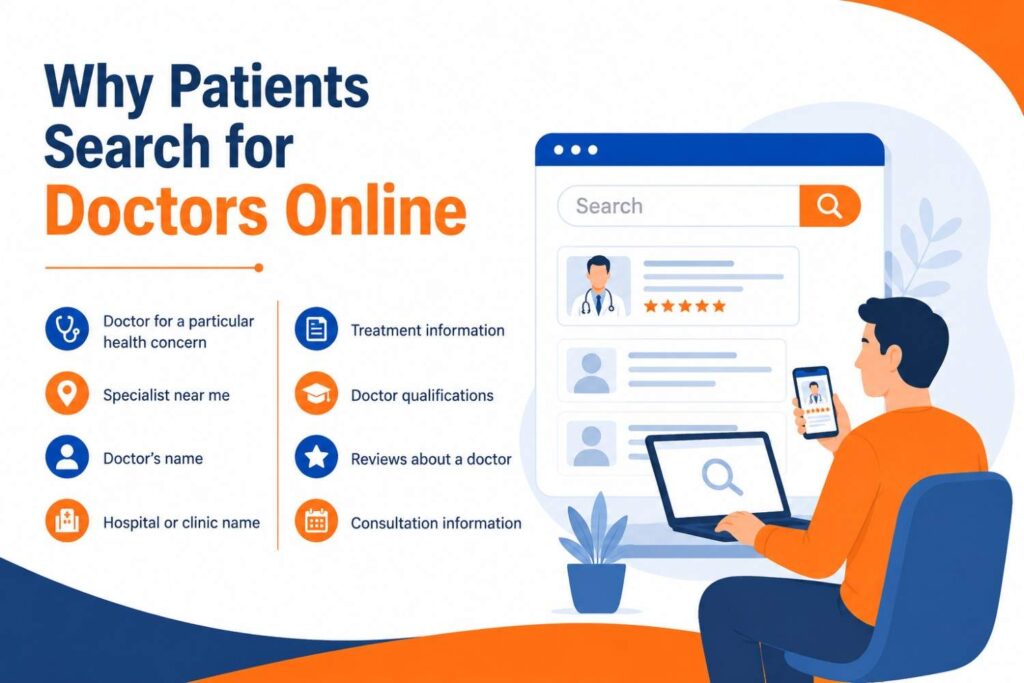
A patient may begin with a simple search such as:
- Doctor for a particular health concern
- Specialist near me
- Doctor’s name
- Hospital or clinic name
- Treatment information
- Doctor qualifications
- Reviews about a doctor
- Consultation information
This means HOW PATIENTS CHOOSE DOCTORS ONLINE is influenced by several digital touchpoints rather than one website or social media profile.
Patients often want answers before contacting a clinic. They may want to understand whether a doctor handles their concern, where the doctor practices, what qualifications the doctor has, and what kind of consultation may be appropriate.
HOW PATIENTS CHOOSE DOCTORS ONLINE
Understanding HOW PATIENTS CHOOSE DOCTORS ONLINE requires looking at the complete decision journey.
A typical patient journey may include:
- Identifying a healthcare need.
- Searching on Google or another search engine.
- Reviewing several doctors or clinics.
- Checking specialties and qualifications.
- Reading online reviews.
- Visiting professional websites.
- Looking for educational information.
- Comparing practical details.
- Assessing whether the information feels trustworthy.
- Contacting the preferred clinic or doctor.
The order may differ from person to person, but patients often combine several sources before making a decision.
1. Search Visibility
Search engines are often the starting point.
When someone searches for a specialist, treatment, or doctor, they may see:
- Doctor websites
- Hospital pages
- Clinic profiles
- Business listings
- Educational articles
- Social media profiles
- Healthcare directories
A doctor who has accurate and useful information across relevant digital platforms can be easier to discover.
Search visibility alone does not determine a patient’s decision. However, if patients cannot easily find basic professional information, they may continue searching for alternatives.
2. Professional Qualifications
Qualifications are among the most important information patients may look for when researching doctors online.
Patients may want to know:
- Medical degrees
- Specialization
- Additional training
- Areas of expertise
- Professional experience
- Fellowships
- Certifications
- Professional memberships
- Academic or research involvement
Clear information helps patients understand a doctor’s professional background.
Qualifications should be presented accurately without exaggerated descriptions or unsupported claims.
Professional Qualifications and Experience
When considering HOW PATIENTS CHOOSE DOCTORS ONLINE, professional experience can become an important factor.
Patients may compare doctors based on their specific healthcare requirements. Someone looking for orthopedic care, for example, may focus on orthopedic experience rather than general medical information.
A professional profile should therefore clearly communicate the doctor’s specialty.
What Patients May Look For
A useful profile can include:
- Full professional name
- Medical qualification
- Specialty
- Sub-specialty
- Areas of clinical interest
- Professional experience
- Relevant training
- Hospital affiliations
- Educational background
- Professional achievements
The goal is not to overwhelm visitors with information. The goal is to make important facts easy to understand.
Online Reviews and Patient Feedback
Reviews can influence how patients perceive a doctor or clinic.
When studying HOW PATIENTS CHOOSE DOCTORS ONLINE, online feedback is often part of the research process.
Patients may look at:
- Overall review patterns
- Number of reviews
- Recent feedback
- Responses from the clinic
- Comments about communication
- General patient experiences
Reviews should be viewed as one source of information rather than the sole basis for choosing a healthcare professional.
A responsible digital strategy should never encourage fake reviews or misleading feedback.
Why Review Quality Matters
A large number of reviews does not automatically mean a doctor is appropriate for every patient.
Instead, patients may use reviews to understand general experiences and identify patterns.
Professional responses to reviews can also demonstrate that a clinic pays attention to patient communication.
Doctor Websites and Professional Profiles
A professional website can provide a central source of information.
The uploaded pillar content similarly highlights professional websites as an important part of a doctor’s digital identity, including biography, qualifications, specialization, experience, educational resources, clinic information, and contact details.
For HOW PATIENTS CHOOSE DOCTORS ONLINE, website quality can affect the research experience.
A useful doctor website should make important information easy to locate.
Important Website Elements
A professional medical website may include:
- Doctor profile
- Qualifications
- Specialty information
- Services
- Treatment explanations
- Educational articles
- Frequently asked questions
- Clinic details
- Appointment information
- Contact information
The website should also work properly on mobile devices because many healthcare searches begin on smartphones.
Simple Navigation Matters
Patients should not have to search through multiple pages to find basic information.
Clear menus and headings can help visitors quickly identify:
- Who the doctor is
- What the doctor specializes in
- Where the doctor practices
- What information is available
- How to contact the clinic
Educational Content and Medical Information
One of the strongest ways doctors can support online patient education is through useful content.
When examining HOW PATIENTS CHOOSE DOCTORS ONLINE, educational information can help patients understand a doctor’s area of expertise.
Content may include:
- Condition explanations
- Treatment overviews
- Procedure guides
- Frequently asked questions
- Prevention information
- Recovery guidance
- General healthcare education
The uploaded pillar page also identifies blogs, short videos, FAQs, health awareness posts, procedure explanations, infographics, and educational social media posts as useful forms of doctor-focused content.
Why Educational Content Builds Understanding
Medical terminology can be difficult for people without healthcare training.
Simple explanations can help patients understand what a condition or treatment involves before they contact a healthcare professional.
Educational content should remain medically responsible and should not present general information as personalized diagnosis or treatment.
Online Visibility and Search Results
Search engine optimization can influence whether patients discover professional information.
A doctor may publish useful content around relevant specialty topics while maintaining accuracy and professional standards.
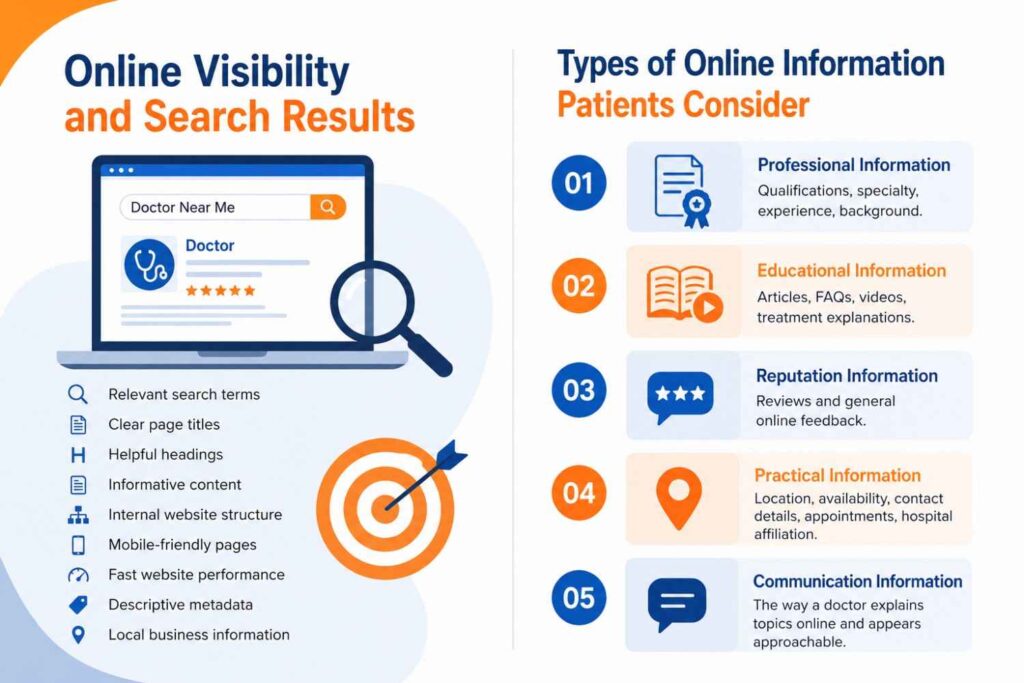
SEO elements can include:
- Relevant search terms
- Clear page titles
- Helpful headings
- Informative content
- Internal website structure
- Mobile-friendly pages
- Fast website performance
- Descriptive metadata
- Local business information
The purpose is not simply to rank for as many keywords as possible.
The goal is to make useful healthcare information easier for the right audience to discover.
Types of Online Information Patients Consider
There are several types of information patients may use when researching doctors.
1. Professional Information
This includes qualifications, specialty, experience, and professional background.
2. Educational Information
Patients may read articles, FAQs, videos, and treatment explanations.
3. Reputation Information
Reviews and general online feedback can influence perceptions.
4. Practical Information
Patients may check:
- Clinic location
- Consultation availability
- Contact details
- Appointment process
- Hospital affiliation
5. Communication Information
The way a doctor explains medical topics online can also influence how approachable the professional appears.
Benefits of a Strong Online Doctor Presence
A well-organized digital presence can provide several benefits.
- Better Patient Understanding
Patients can access relevant professional information before contacting the clinic.
- Easier Professional Discovery
Search-friendly pages can help patients discover doctors when looking for specific specialties.
- Improved Information Access
A website can provide information outside normal consultation hours.
- Stronger Professional Recognition
Consistent educational content can help associate a doctor’s name with relevant areas of expertise.
- Better Communication
Clear online information can reduce uncertainty about qualifications, specialties, services, and appointment processes.
These benefits do not replace clinical quality. Instead, they support the communication of genuine professional expertise.
Symptoms of a Weak Online Presence
The word “symptoms” can also be used to describe signs that a doctor’s digital presence may need improvement.
Common signs include:
- Outdated professional information
- Missing qualifications
- Inconsistent doctor profiles
- Poor website navigation
- Little educational content
- Incomplete contact details
- Unclear specialty information
- Poor mobile experience
- Inactive digital profiles
- Conflicting information across platforms
These issues can make online research more difficult.
A patient who cannot quickly verify basic information may continue searching elsewhere.
How Personal Branding Influences Online Doctor Selection
Personal branding is closely connected with HOW PATIENTS CHOOSE DOCTORS ONLINE because it helps communicate a doctor’s professional identity.
A doctor’s online identity can include:
- Expertise
- Experience
- Communication style
- Educational content
- Professional values
- Website presence
- Search visibility
- Digital reputation
The purpose is not to create an artificial personality. It is to communicate genuine professional strengths consistently across appropriate digital platforms.
A cardiologist may regularly discuss heart health education, while a dermatologist may focus on skin health information. A surgeon may create content explaining procedures, recovery, and preparation.
This consistent focus helps patients understand what type of professional they are researching.
Conclusion
Understanding HOW PATIENTS CHOOSE DOCTORS ONLINE is important because the healthcare decision journey increasingly begins with digital research. Patients may compare qualifications, specialties, reviews, websites, educational content, search results, and practical information before contacting a professional.
Doctors can make this process easier by maintaining accurate profiles, creating useful educational resources, improving website usability, supporting search visibility, and communicating consistently.
A strong online presence should not depend on exaggerated promises. It should reflect genuine expertise, professional experience, accurate information, and patient-focused communication.
For healthcare professionals seeking to strengthen how they are discovered and understood online, a structured digital strategy can create a clearer path from search to informed consultation. This approach is especially relevant for doctors building their professional digital presence in Kerala.For more information about search engine optimization best practices, visit Google’s SEO Starter Guide.

