
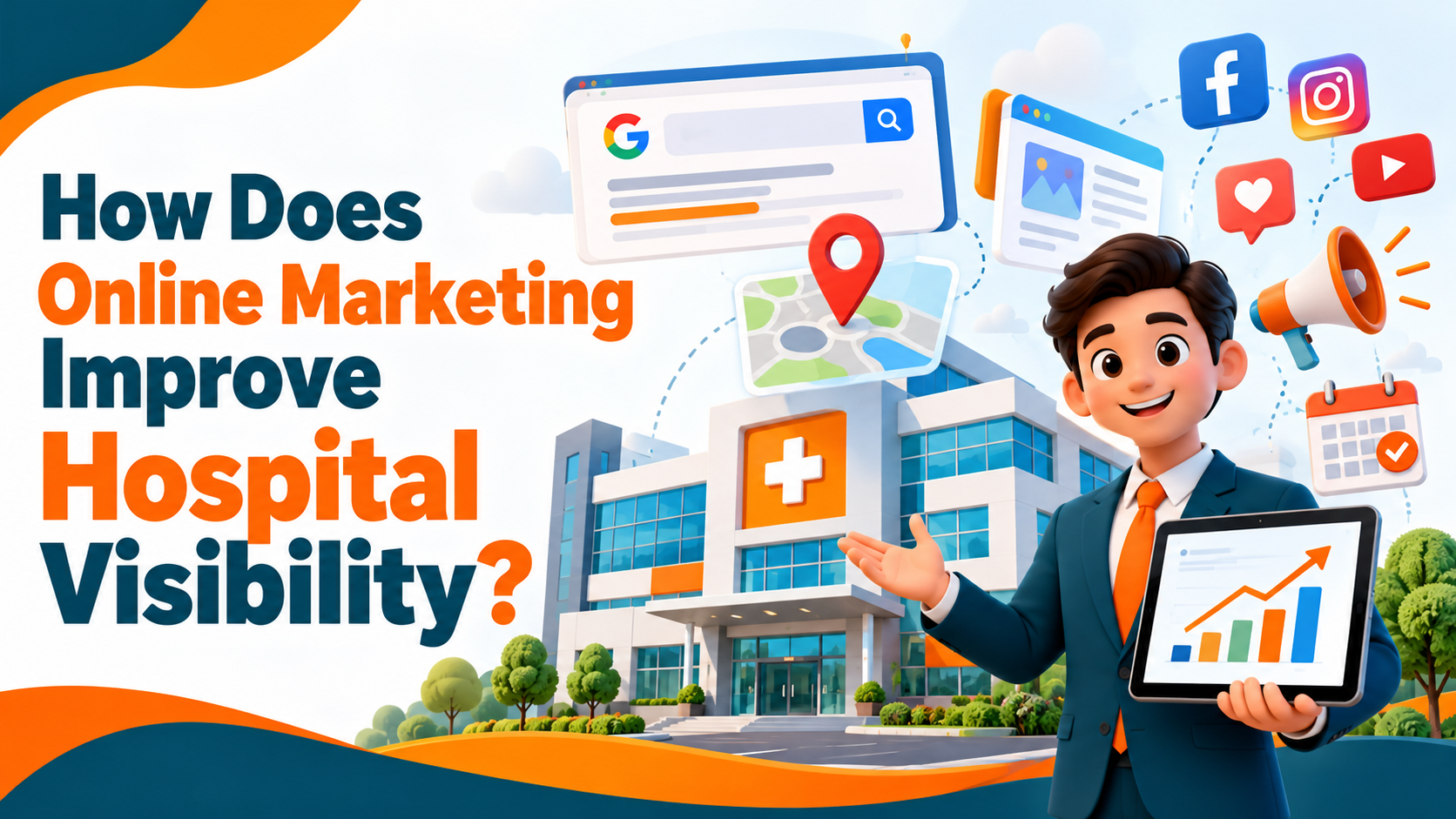
How Does Online Marketing Improve Hospital Visibility?
How Does Online Marketing Improve Hospital Visibility? Online marketing improves hospital visibility by helping people discover healthcare services through search engines, websites, social media platforms, Google Business Profile, and digital advertisements. Today, many patients and family members search online before choosing a hospital, finding a specialist, or booking a medical appointment. They want to know which services are available, where the hospital is located, how to contact the healthcare team, and what to expect during a visit.
For example, a parent searching for a children’s hospital or an older adult looking for a nearby specialist may begin with a simple Google search. If a hospital has an informative website, accurate contact details, useful health articles, and an active online presence, it becomes easier for people to discover its services. This is particularly relevant for hospitals competing for attention in healthcare markets such as Thrissur, Kerala, where patients may compare several providers before making a decision.
Online marketing is not simply about advertising medical services. It is about making accurate information accessible, explaining healthcare options clearly, and helping people connect with the right department. A well-planned strategy combines website development, search engine optimization (SEO), content creation, social media management, online reputation management, and targeted advertising. The following ten strategies explain how hospitals can improve their visibility and communicate more effectively with patients and their families.
1. How Does Online Marketing Improve Hospital Visibility Through SEO?
Search engine optimization, commonly known as SEO, helps hospital websites appear in relevant search engine results. When someone searches for a hospital, medical department, diagnostic service, or specialist consultation, search engines try to identify pages that best match the search. SEO helps hospitals organize and improve their online information so that search engines and visitors can understand it more easily.
A hospital can create dedicated website pages for departments such as cardiology, orthopaedics, paediatrics, gynaecology, and general medicine, provided those services are available. Each page should explain the department’s purpose, available services, appointment procedures, and relevant contact information. Clear headings, descriptive page titles, useful internal links, and accurate image alt text can also support website optimization.
Keyword research is another important part of SEO. Hospitals should understand the words people commonly use when searching for healthcare services. For example, someone may search for a hospital in a particular city or look for information about a specific medical department. These search terms can guide website content without requiring unnatural keyword repetition.
Technical factors matter as well. A website should load efficiently, work on mobile phones, provide secure connections, and allow visitors to navigate between pages easily.
SEO generally requires consistent effort and does not guarantee a particular ranking. However, useful content, a well-organized website, and regular performance monitoring can improve a hospital’s opportunities to appear in relevant searches.
2. Improve Local Visibility With Google Business Profile
Google Business Profile helps people find hospitals through Google Search and Google Maps. When someone searches for a nearby healthcare facility, the profile may display the hospital’s name, location, telephone number, operating hours, website, photographs, and directions.
Hospitals should maintain accurate and complete business information. The hospital’s name, address, phone number, website link, and opening hours should match the information published on other relevant platforms. Available departments and services should be described accurately, and changes to contact information should be updated promptly.
Photographs can help visitors recognize the hospital before arriving. Appropriate images of the exterior, reception area, waiting spaces, and other facilities can make the listing more informative. Hospitals can also publish relevant updates, such as general health awareness messages, changes in operating hours, and service announcements.
Reviews are another part of local visibility. Patients may read reviews to understand other visitors’ experiences with communication, appointment arrangements, and general service quality. Hospitals should respond professionally without disclosing confidential patient information or requesting positive reviews in exchange for rewards.
A complete profile does not guarantee the highest position on Google Maps. However, accurate information helps people discover the facility and understand how to contact it. Regularly checking the profile also reduces the risk of outdated details confusing prospective visitors.
3. Build a Mobile-Friendly and Informative Hospital Website
A hospital website is often one of the first places people visit when researching healthcare services. It should provide reliable information in a format that is easy to understand, whether the visitor is a child reading with a parent, a working adult arranging an appointment, or an older person looking for a telephone number.
A useful hospital website should include department details, doctor profiles, consultation timings, available services, location information, and appointment instructions. Important contact details should be easy to find rather than hidden within several menus.
Mobile-friendly design is especially important because many people use smartphones to search for hospitals. Pages should adjust to different screen sizes, use readable text, and load without unnecessary delays. Buttons for calling the hospital or requesting an appointment should be easy to use.
Website accessibility should also be considered. Clear headings, descriptive links, sufficient colour contrast, and straightforward navigation can help people with different abilities use the site more comfortably.
Hospitals should regularly check for broken links, outdated information, and inaccurate service descriptions. Online forms should request only necessary information and handle personal data securely.
A professional website supports other digital marketing activities because search engine results, social media posts, and advertisements can direct visitors to relevant pages. When the website answers common questions clearly, people can understand the next steps without unnecessary confusion.
4. Use Social Media Marketing to Increase Hospital Awareness
Social media marketing allows hospitals to share useful information and communicate with their communities through platforms such as Facebook, Instagram, LinkedIn, and YouTube. These platforms can introduce hospital departments, explain available services, and distribute general health education to audiences who may not regularly visit the hospital’s website.
Hospitals can publish content about preventive healthcare, routine screenings, seasonal health concerns, healthy habits, and general appointment preparation. Infographics can explain simple health concepts, while short videos can introduce a department or describe what happens during a scheduled consultation.
A consistent content calendar helps hospitals maintain an organized presence. Instead of publishing unrelated posts whenever time is available, the marketing team can plan educational content, hospital updates, department introductions, and awareness campaigns in advance.
Language selection can also influence accessibility. Hospitals serving communities in Kerala may use Malayalam, English, or a suitable combination of both to communicate with different audience groups.
Social media engagement should remain professional. Questions about individual symptoms or treatment should not be answered with unsupported diagnoses in public comments. Hospitals should avoid revealing patient information and obtain appropriate permission before publishing identifiable patient stories or photographs.
Social media visibility does not depend only on the number of followers. Useful information, consistent communication, and relevant content can help hospitals build recognition and encourage people to explore their services through official channels.
5. Publish Educational Blogs and Healthcare Articles
Educational blogs help hospitals answer questions that people commonly ask about medical services, preventive care, health conditions, and hospital procedures. They can also support SEO by creating relevant pages that search engines may display for appropriate queries.
For example, a hospital could publish an article about preparing for a routine health checkup, understanding the purpose of a screening test, or knowing what information to bring to a specialist consultation. Such content helps people understand general healthcare processes before visiting the hospital.
Each article should focus on a clear subject and use simple language. Short paragraphs, descriptive headings, examples, and frequently asked questions can make complex information easier to understand. Medical terms should be explained rather than left unexplained.
Healthcare content requires particular care because inaccurate information can affect people’s decisions. Articles about symptoms, diagnosis, treatment, or medical risks should be reviewed by qualified professionals. They should not promise guaranteed outcomes or suggest that general information replaces an individual medical assessment.
Internal links can guide readers from an educational article to a relevant department page, doctor profile, or appointment information page. Older articles should also be reviewed periodically to ensure that medical guidance and service details remain appropriate.
Publishing useful content consistently can help hospitals build a dependable information resource for patients and families while creating more opportunities for relevant online discovery.
6. Increase Reach Through Targeted Digital Advertising
Digital advertising can help hospitals increase visibility for selected services, campaigns, and locations. Unlike SEO, which generally develops over time, paid advertisements can provide additional exposure while a campaign is active.
Google Ads can display advertisements in relevant search contexts, while Facebook and Instagram advertising can help hospitals communicate service information and health awareness messages to suitable audiences. Campaigns may focus on a particular geographic area or a clearly defined communication objective, subject to platform rules and applicable healthcare advertising requirements.
Before launching a campaign, hospitals should identify the service being promoted, the intended audience, the budget, and the action they want visitors to take. An advertisement about a diagnostic service, for example, should direct people to a page that explains the service accurately and provides appropriate contact information.
The destination page matters because an advertisement alone does not provide the full patient experience. Visitors need clear details, relevant information, and an easy way to make an inquiry.
Hospitals should measure campaign performance using indicators such as impressions, clicks, website visits, appointment inquiries, and cost per inquiry. Results depend on competition, campaign quality, audience relevance, budget, and other factors.
Healthcare advertisements should remain factual and respectful. Unsupported medical claims, misleading guarantees, inappropriate use of sensitive health information, and exaggerated comparisons should be avoided. Targeted advertising works best when it supports accurate information rather than relying on pressure or fear.
7. Strengthen Hospital Reputation Through Online Reviews
Online reputation can influence how people perceive a hospital before they visit it. Reviews may help prospective patients understand other visitors’ experiences with appointment arrangements, communication, waiting times, and general service interactions.
Hospitals should monitor reviews on Google and other relevant platforms. Positive feedback can receive a brief expression of appreciation, while negative feedback should be addressed calmly and professionally. If an issue requires investigation, the hospital can invite the reviewer to contact the appropriate department privately.
Privacy must remain a priority. Public responses should not confirm whether someone received treatment, reveal medical details, or disclose information from a patient’s records.
Hospitals can invite genuine patients to share honest feedback through neutral requests. They should not purchase reviews, offer rewards for positive ratings, or pressure patients to leave favourable comments.
Reputation management also includes maintaining consistent information across websites, directories, and social media accounts. Conflicting phone numbers, incorrect addresses, and outdated department details can create uncertainty.
Reviews are only one part of a hospital’s reputation, and a particular rating cannot be guaranteed. Nevertheless, respectful responses, accurate information, and genuine attention to feedback can help hospitals communicate professionally and identify areas where their service experience may need improvement.
8. Use Medical Videos to Make Healthcare Information Easier to Understand
Video marketing gives hospitals another way to explain services and share educational information. Some people find it easier to watch a healthcare professional explain a subject than to read a long article containing unfamiliar medical terminology.
Hospitals can create short videos introducing departments, explaining general health topics, discussing preventive care, or describing what visitors can expect during a scheduled appointment. Longer videos can feature educational discussions, health awareness sessions, or general explanations of available services.
Videos should use clear audio, suitable lighting, readable captions, and straightforward language. Malayalam and English subtitles can make information accessible to more viewers. The video title and description should accurately describe its subject so people understand what they are about to watch.
YouTube can serve as a library of educational videos, while shorter versions can be adapted for other social media platforms. Relevant website pages can also include videos when they provide genuine value to readers.
Medical professionals should review health-related content for accuracy before publication. Hospitals must obtain appropriate consent when filming identifiable individuals and avoid displaying confidential records or private clinical conversations.
Videos should not exaggerate treatment benefits or present an individual patient’s experience as a guaranteed result for others. Clear, educational video content can help hospitals explain their services in a format that many people find convenient.
9. Make Online Appointment Information Clear and Convenient
Hospital visibility becomes more useful when people can easily understand how to contact the facility after discovering it online. A visitor may find a hospital through Google, read an article, or watch a social media video, but still struggle to make an appointment if the next steps are unclear.
Hospitals should display telephone numbers, addresses, consultation timings, and appointment instructions prominently. Depending on the services available, they may also provide online appointment requests or WhatsApp communication through appropriate official channels.
Contact forms should be simple and request only information necessary to process the inquiry. Hospitals should explain how personal information is handled and protect any information submitted through their digital platforms.
Appointment confirmations and reminders can help patients keep track of scheduled visits. General instructions about arriving on time, bringing relevant documents, or contacting the correct department can also reduce avoidable confusion.
Older adults and people with limited digital experience may benefit from straightforward instructions and an easily accessible telephone option. Digital convenience should not mean that people without strong technical skills are excluded from accessing information.
Hospitals must also distinguish routine appointment requests from emergencies. Websites and automated messages should not suggest that an online form or social media message is suitable for urgent medical assistance.
Clear communication helps turn online discovery into a practical next step while supporting a more accessible patient experience.
10. Measure Results and Improve the Online Marketing Strategy
Online marketing requires regular evaluation to understand which activities are useful and which need improvement. Hospitals should establish clear objectives before investing time and money in digital campaigns.
Google Analytics can help measure website activity, while Google Search Console provides information about search performance and the queries through which people discover a website. Google Business Profile insights and advertising reports can provide additional information about how users interact with hospital listings and campaigns.
Useful measurements include organic search traffic, relevant search visibility, clicks on contact links, appointment inquiries, advertising costs, and engagement with educational content. Hospitals should choose metrics that match their objectives instead of relying only on social media likes or follower counts.
For example, a blog may attract visitors who want general health information, while a department page may attract people seeking appointment details. Both activities can be useful, but their performance should be evaluated according to their different purposes.
Marketing teams should review results periodically, identify pages that need improvement, and update campaigns based on reliable evidence. They should also use appropriate privacy safeguards when collecting or analyzing data.
A structured strategy can combine SEO, website optimization, social media management, content creation, and advertising into a coordinated approach. For hospitals in Thrissur and other healthcare markets, consistent measurement and improvement can help make online information more discoverable and relevant to the people who need it.
Frequently Asked Questions
Online marketing improves hospital visibility through SEO, social media, Google Business Profile, informative website content, and digital advertising. These strategies help people discover hospital services and find relevant contact information online.
Online marketing helps hospitals communicate with people searching for healthcare services. It makes information about departments, available services, locations, and appointment procedures easier to discover.
SEO helps search engines understand hospital websites and identify pages relevant to users' searches. Optimized service pages, useful articles, descriptive titles, internal links, and technical improvements can support organic search visibility over time.
Yes. Hospitals can use Facebook, Instagram, YouTube, and LinkedIn to share health education, introduce departments, publish service updates, and communicate with their communities. Content should be accurate and respect patient privacy.
Google Business Profile helps people find hospital addresses, phone numbers, operating hours, websites, and directions through Google Search and Google Maps. Keeping these details accurate supports local discovery.
Healthcare blogs can answer common questions, explain general medical topics, and create additional opportunities for search visibility. Articles should use simple language and contain accurate information reviewed by qualified professionals when appropriate.
Online advertising can increase exposure for relevant hospital services through search engines and social media. Campaign effectiveness depends on the audience, budget, advertising message, competition, and destination page.
Online reviews can influence how people evaluate a hospital and whether they explore its services. Hospitals should respond professionally, protect confidential patient information, and encourage honest feedback without offering incentives for positive ratings.
The timeline depends on the hospital's existing website, competition, content quality, and marketing activities. Paid campaigns can provide exposure while active, whereas SEO generally requires consistent effort over time. Specific rankings cannot be guaranteed.
D Plus Connect focuses on healthcare digital marketing, including SEO, social media management, content creation, strategic advertising, brand development, and online visibility optimization. Hospitals can explore suitable strategies based on their marketing objectives.

