
Effective LinkedIn Branding for Healthcare Professionals: Build a Stronger Professional Presence

LinkedIn Branding for Healthcare Professionals goes beyond simply listing qualifications. It involves strategically presenting professional expertise through profile optimization, educational content, meaningful networking, professional achievements, and consistent communication. For doctors, dentists, therapists, researchers, healthcare administrators, and other professionals, a thoughtful LinkedIn Branding for Healthcare Professionals strategy can strengthen professional credibility and support long-term online visibility.
What Is LinkedIn Branding for Healthcare Professionals?
LinkedIn Branding for Healthcare Professionals is the process of developing and communicating a professional identity through LinkedIn.
For a healthcare professional, this identity may include:
- Medical specialty
- Professional qualifications
- Clinical experience
- Areas of expertise
- Research interests
- Professional achievements
- Conferences and events
- Publications
- Educational interests
- Industry connections
- Professional opinions and insights
A LinkedIn profile can function as a digital professional introduction. Instead of presenting information randomly, healthcare professionals can organize their profile so visitors can quickly understand their background and areas of expertise.
What Makes LinkedIn Different?
LinkedIn is particularly useful for professional communication because the platform is built around professional identities, relationships, knowledge sharing, and industry discussions.
For healthcare professionals, this creates opportunities to communicate with:
- Medical colleagues
- Researchers
- Healthcare organizations
- Academic institutions
- Industry professionals
- Professional associations
- Healthcare entrepreneurs
- Students and trainees
The objective should not be to turn every interaction into promotion. Professional networking works better when the focus remains on meaningful communication and useful knowledge.
Why Is LinkedIn Branding Important for Healthcare Professionals?
People researching healthcare professionals may encounter information from several sources. A professional LinkedIn profile can provide another source of information about a person’s career, qualifications, professional interests, and activities.
Effective LinkedIn Branding for Healthcare Professionals can therefore contribute to a broader online professional presence.
Strengthening Professional Credibility
A complete LinkedIn profile can provide context that may not fit into a short social media biography.
Healthcare professionals can highlight:
- Education
- Certifications
- Professional experience
- Publications
- Research
- Conferences
- Awards
- Professional memberships
- Teaching activities
This creates a more detailed representation of professional experience.
Supporting Professional Networking
LinkedIn can also help healthcare professionals maintain relationships beyond their immediate workplace.
A professional may connect with colleagues after conferences, participate in industry discussions, follow research developments, or share educational resources.
Increasing Professional Discoverability
When people search for a healthcare professional’s name online, a well-maintained professional profile can become an important part of the information they encounter.
This makes profile accuracy particularly important.
15 LinkedIn Branding Strategies for Healthcare Professionals
1. Define Your Professional Positioning
The first step in LinkedIn Branding for Healthcare Professionals is deciding what you want your professional profile to communicate.
Start by identifying:
- Your primary specialty
- Your areas of expertise
- Your professional experience
- Your target professional audience
- Your areas of interest
- Topics you can discuss confidently
A cardiologist, for example, may focus on cardiovascular health, clinical experience, research, and professional education.
A healthcare administrator may instead emphasize healthcare management, operations, leadership, and organizational development.
Your LinkedIn profile should reflect your actual professional identity rather than attempting to cover every possible subject.
2. Optimize Your Professional Headline
Your LinkedIn headline deserves careful attention because it provides an immediate summary of your professional identity.
Instead of using only a job title, consider communicating:
- Profession
- Specialty
- Area of expertise
- Professional interest
For example:
Orthopedic Surgeon | Joint Health & Sports Injury Care | Patient Education
This gives visitors more context than simply writing “Doctor.”
Avoid filling your headline with excessive promotional claims.
3. Write a Strong About Section
The About section provides an opportunity to explain your professional journey in more detail.
A useful structure can include:
Introduction
Briefly explain who you are professionally.
Expertise
Describe your specialty and areas of professional interest.
Experience
Highlight relevant experience and professional development.
Interests
Mention research, education, healthcare awareness, or other relevant areas.
Professional Focus
Explain the type of knowledge or perspectives you regularly share.
This creates a more complete professional narrative.
4. Keep Your Qualifications Accurate and Updated
One of the most important LinkedIn Branding for Healthcare Professionals principles is accuracy.
Review your profile regularly to make sure your:
- Qualifications
- Job titles
- Work experience
- Certifications
- Publications
- Professional memberships
- Current roles
are presented correctly.
Do not add credentials, memberships, positions, or achievements that cannot be verified.
Professional credibility depends heavily on accurate information.
5. Use a Professional Profile Photograph
A clear professional photograph can make the profile more recognizable.
Choose an image that is:
- Recent
- Well-lit
- Clear
- Professional
- Appropriate for your field
The photograph should also be consistent with the professional image used on other relevant platforms where appropriate.
6. Build a Strong Featured Section
LinkedIn allows professionals to highlight selected content and resources.
Healthcare professionals can use this space to showcase:
- Educational articles
- Research publications
- Professional interviews
- Conference presentations
- Relevant videos
- Healthcare awareness projects
- Professional websites
This gives profile visitors a way to explore your work beyond the basic profile information.
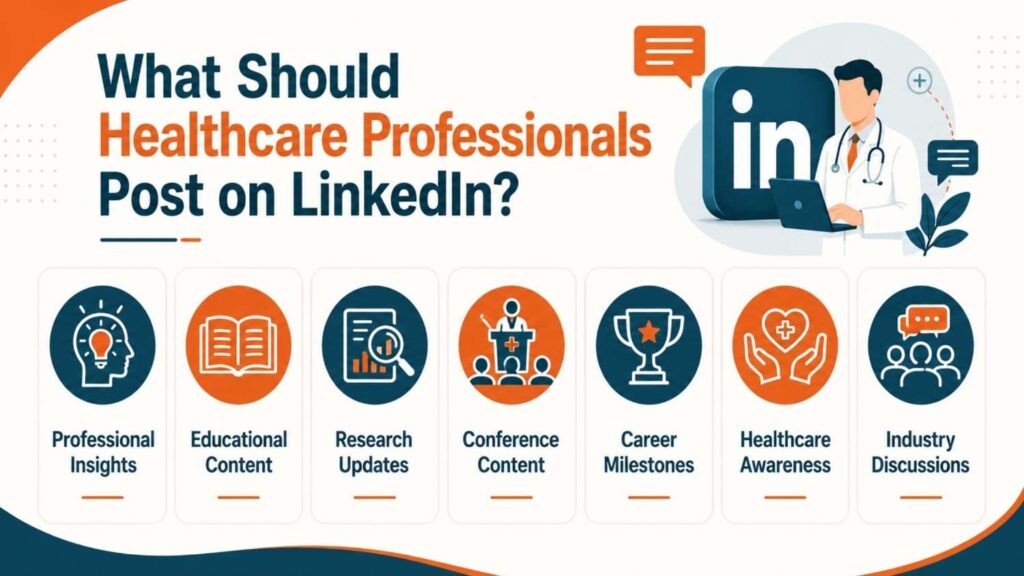
7. Share Professional Knowledge Regularly
Another core element of LinkedIn Branding for Healthcare Professionals is knowledge sharing.
Posts can cover:
- Healthcare developments
- Research findings
- Professional observations
- Medical education
- Industry developments
- Conference experiences
- General health awareness
- Professional lessons
The content should remain appropriate to your expertise.
You do not need to publish every day. A realistic publishing schedule is more sustainable.
8. Turn Professional Experiences Into Educational Content
Healthcare professionals have valuable experiences that can often become educational content without revealing confidential patient information.
For example, after attending a professional conference, you might discuss:
- An interesting area of research
- A new development in your specialty
- A broader professional takeaway
- Questions raised during a presentation
This creates useful content while demonstrating active participation in the professional field.
9. Highlight Conferences and Professional Events
Conferences can provide excellent opportunities for professional branding.
Instead of simply posting:
“Attending conference.”
provide useful context.
You could discuss:
- The subject of the conference
- Your professional interest in the topic
- Key general insights
- A presentation you attended
- What you hope to learn
This transforms an ordinary update into professional knowledge sharing.
10. Engage With Relevant Professional Communities
LinkedIn branding is not only about publishing your own posts.
Meaningful participation can include:
- Commenting on relevant discussions
- Sharing useful resources
- Congratulating professional achievements
- Participating in specialty-related conversations
- Following healthcare organizations
- Connecting with professional peers
Thoughtful comments can sometimes communicate expertise just as effectively as original posts.
Avoid leaving generic comments simply to increase visibility.
11. Use Different Content Formats
A professional LinkedIn strategy does not have to rely exclusively on text posts.
Depending on your content, you can use:
- Short videos
- Documents
- Infographics
- Images
- Articles
- Research summaries
- Professional photographs
- Presentation materials
Different formats can help explain different types of information.
For example, a complex professional concept may work better as a document or infographic, while a short professional insight may work well as a text post.
12. Share Publications and Research
Research can play an important role in LinkedIn Branding for Healthcare Professionals, particularly for professionals involved in academic or evidence-based work.
Relevant content may include:
- Published research
- Journal articles
- Conference papers
- Research presentations
- Academic projects
- Research-related discussions
When discussing research, explain why the subject matters rather than simply sharing a publication link.
This can make professional content more accessible to a broader audience.
13. Build Relationships Instead of Chasing Followers
LinkedIn should not be treated purely as a follower-growth platform.
The quality of your professional network can be more meaningful than a large number of passive connections.
Consider connecting with people who are genuinely relevant to your professional field, such as:
- Colleagues
- Researchers
- Healthcare leaders
- Medical educators
- Industry professionals
- Professional organizations
- Academic peers
A strong network can create opportunities for knowledge exchange and collaboration.
14. Maintain Professional Communication Standards
Healthcare professionals need to be particularly careful about how they communicate online.
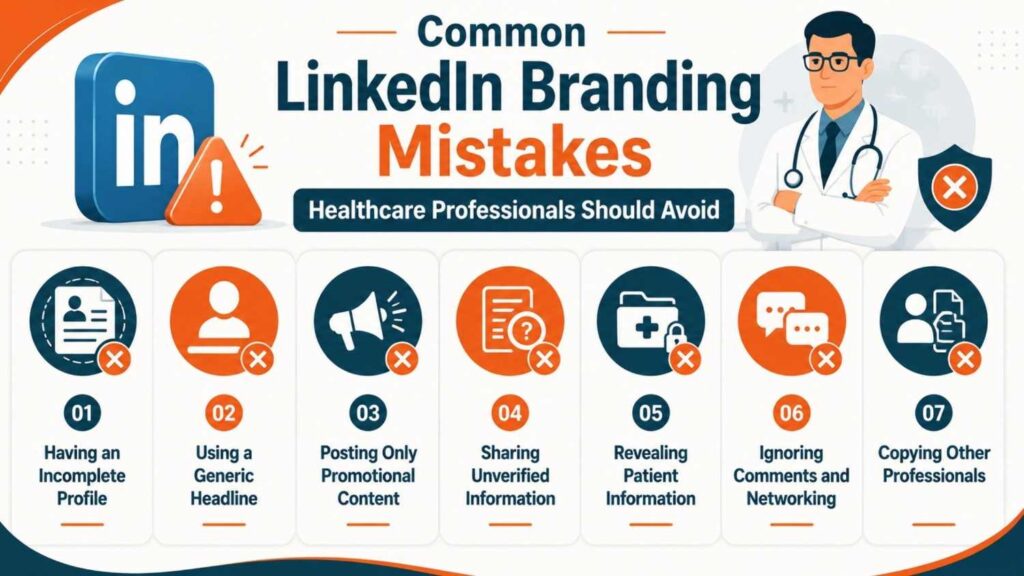
Avoid:
- Patient-specific discussions
- Confidential information
- Unsupported medical claims
- Exaggerated treatment promises
- Misleading statistics
- Sensationalized health information
Educational content should be accurate, understandable, and appropriately framed.
Professional communication should strengthen credibility rather than create unnecessary controversy.
15. Review Your LinkedIn Presence Regularly
The final strategy among these LinkedIn Branding for Healthcare Professionals recommendations is regular profile review.
Search your professional name and examine how your LinkedIn profile appears alongside other online results.
Ask:
- Is my specialty immediately clear?
- Are my qualifications current?
- Does my profile reflect my present role?
- Are my recent posts professionally relevant?
- Does my profile communicate my expertise?
- Are there outdated details that should be removed?
Your professional identity can evolve, so your LinkedIn profile should evolve with it.
How to Build a Professional LinkedIn Profile
A strong profile should provide enough information for someone to understand your professional background without overwhelming them.
Profile Checklist
Make sure your profile includes:
- Professional photograph
- Clear headline
- Complete About section
- Current professional position
- Education
- Qualifications
- Relevant certifications
- Professional experience
- Publications where appropriate
- Featured content
- Relevant skills
- Professional interests
Consistency is also important.
Your name, specialty, qualifications, and professional information should not conflict with your website or other established professional profiles.
How LinkedIn Content Can Demonstrate Healthcare Expertise
LinkedIn should not necessarily operate independently from the rest of your online presence. It can form one important part of a broader personal branding for doctors strategy that includes a professional website, educational content, social media, and other digital platforms.
For example, instead of writing:
“I am an expert in cardiovascular health.”
a healthcare professional can publish a clear explanation of a cardiovascular topic, discuss relevant research, or share professional insights from a conference.
The knowledge itself demonstrates the professional’s subject familiarity.
This is an important distinction in LinkedIn Branding for Healthcare Professionals.
Professional credibility is generally stronger when it is supported by genuine qualifications, experience, and useful contributions rather than repeated self-promotion.
How to Maintain a Consistent LinkedIn Brand
Consistency does not mean repeating the same message.
It means maintaining similar professional standards across your profile and content.
Consider creating simple guidelines for:
- Writing style
- Professional tone
- Content categories
- Visual presentation
- Profile photography
- Topics you regularly discuss
- Types of professional achievements you share
For healthcare professionals managing multiple digital platforms, consistency can also help ensure that their professional information remains recognizable across websites and social media.
How LinkedIn Supports a Broader Digital Branding Strategy
LinkedIn should not necessarily operate independently from the rest of your online presence.
A healthcare professional may have:
- Professional website
- LinkedIn profile
- Other social media profiles
- Research publications
- Educational articles
- Professional directories
- Conference profiles
These resources can complement one another.
For example, a LinkedIn post can introduce a healthcare topic while directing interested readers to a detailed educational article on a professional website.
Similarly, a research publication can be discussed on LinkedIn while the complete professional background remains available on the website.
This creates a connected digital identity rather than isolated online profiles.
How a Healthcare Marketing Agency Can Support LinkedIn Branding
Healthcare professionals often have limited time for managing professional profiles, writing content, designing graphics, and maintaining a consistent digital strategy.
A healthcare-focused marketing team can support areas such as:
- LinkedIn profile optimization
- Content strategy
- Professional copywriting
- Educational content creation
- Graphic design
- Video content
- Website content
- SEO
- Social media management
- Digital brand development
The healthcare professional should remain the source of medical expertise and professional insight.
The marketing team can help transform that expertise into content that is structured, readable, visually consistent, and suitable for the intended audience.
A successful LinkedIn Branding for Healthcare Professionals strategy should always reflect the individual’s genuine professional experience rather than creating an artificial online persona.
Conclusion
LinkedIn Branding for Healthcare Professionals goes beyond maintaining a professional profile. It involves strategically communicating qualifications, experience, knowledge, achievements, and professional interests through a complete profile, educational content, research updates, conference posts, and meaningful networking. Healthcare professionals should focus on accuracy, professionalism, consistency, and authenticity rather than exaggerated claims or constant promotion.
LinkedIn can also complement a professional website, SEO, educational content, and other digital platforms to create a stronger online identity. Ultimately, effective LinkedIn Branding for Healthcare Professionals comes from consistently demonstrating genuine expertise and professional value, helping healthcare professionals build credibility and make reliable information about their work easier to discover. A strong profile should provide enough information for someone to understand your professional background without overwhelming them. Following LinkedIn profile optimization guidance can also help ensure that important sections such as your headline, experience, education, skills, publications, and professional achievements are presented effectively.
Frequently Asked Questions
LinkedIn Branding for Healthcare Professionals involves building and communicating a professional identity through a LinkedIn profile, educational content, professional achievements, networking, and industry participation.
LinkedIn can help healthcare professionals present their qualifications, experience, professional interests, publications, and knowledge while connecting with relevant professional networks.
A profile should generally include a professional photograph, clear headline, About section, education, qualifications, experience, certifications, relevant publications, and professional interests.
There is no universal posting schedule. A consistent and manageable publishing routine is generally better than publishing frequently for a short period and then becoming inactive.
Doctors can share general educational and professional information that is relevant to their expertise. Medical content should be accurate, responsible, and should not disclose confidential patient information.
Yes. A complete profile combined with useful professional content, accurate qualifications, research discussions, and meaningful industry participation can contribute to a stronger professional digital identity.
Professional services can be mentioned appropriately, but a LinkedIn strategy should not depend entirely on promotional content. Educational and professional knowledge-sharing can provide greater long-term value.
Yes. LinkedIn can help professionals connect with colleagues, researchers, healthcare organizations, educators, and other relevant people within the healthcare ecosystem.
Connecting LinkedIn with a professional website can create a more complete digital presence. LinkedIn can introduce professional topics while the website provides additional information and resources.
They can improve their branding by optimizing their profile, clearly defining their professional positioning, sharing useful knowledge, highlighting achievements, engaging with relevant communities, maintaining accurate information, and publishing consistently.

