
7 Powerful Reasons Who Needs Healthcare Marketing Today
Healthcare has become more competitive than ever before. Patients now search online before choosing a doctor, clinic, hospital, diagnostic center, or wellness provider. They compare services, read reviews, browse websites, and evaluate social media presence before making a decision. This change in patient behavior has made Who Needs Healthcare Marketing an important question for every healthcare organization. Whether you operate in Thrissur or another city, healthcare marketing helps providers build trust, educate patients, and improve visibility in an increasingly digital world.
Understanding Who Needs Healthcare Marketing is essential because marketing is no longer limited to promoting services. Instead, it focuses on connecting patients with reliable healthcare providers through valuable information, ethical communication, and a strong online presence. From independent practitioners to multi-specialty hospitals, every healthcare business benefits from strategic marketing efforts.
This guide explains Who Needs Healthcare Marketing, why it matters, and how different healthcare organizations can use it to improve patient engagement, strengthen their reputation, and achieve long-term growth.
Why Healthcare Marketing Matters
Healthcare marketing is the process of promoting healthcare services while educating patients and building confidence in a provider’s expertise. Unlike traditional advertising, healthcare marketing prioritizes trust, transparency, and patient education.
Modern patients expect healthcare providers to have:
- A professional website
- Easy online appointment booking
- Educational health content
- Positive patient reviews
- Active social media profiles
- Accurate business listings
- Responsive communication
Without these elements, even excellent healthcare providers may struggle to attract new patients.
Who Needs Healthcare Marketing
The simple answer is that nearly every healthcare organization benefits from healthcare marketing. However, different providers require different marketing strategies depending on their goals and target audience.
Private Clinics
Private clinics often compete with larger hospitals and healthcare chains. Effective healthcare marketing helps clinics increase visibility, attract local patients, and establish themselves as trusted healthcare providers.
Marketing supports private clinics by:
- Improving local online visibility
- Increasing appointment bookings
- Building patient trust
- Educating the community
- Encouraging repeat visits
Hospitals
Hospitals offer multiple specialties and require consistent communication with different patient groups.
Healthcare marketing enables hospitals to:
- Promote specialized departments
- Share healthcare awareness campaigns
- Improve brand recognition
- Build credibility
- Increase patient inquiries
Hospitals also benefit from maintaining strong digital platforms where patients can easily access information.
Specialty Medical Centers
Centers specializing in cardiology, orthopedics, dermatology, fertility, dentistry, ophthalmology, plastic surgery, oncology, or urology depend heavily on patient awareness.
Healthcare marketing helps specialty centers:
- Explain complex treatments
- Build confidence among prospective patients
- Showcase advanced technologies
- Improve patient education
- Increase consultation requests
Diagnostic Centers
Diagnostic laboratories and imaging centers often rely on referrals. However, patients increasingly search online for nearby diagnostic services.
Healthcare marketing helps diagnostic centers by:
- Improving search engine rankings
- Highlighting available tests
- Promoting preventive health packages
- Educating patients about diagnostic procedures
- Building trust through informative content
Dental Clinics
Dental clinics serve patients across all age groups. Effective healthcare marketing allows dental practices to communicate preventive care, cosmetic procedures, and oral health education.
Marketing activities may include:
- Educational blogs
- Before-and-after success stories
- Oral hygiene awareness campaigns
- Google Business Profile optimization
- Patient testimonials
Physiotherapy Clinics
Physiotherapists depend on patient awareness and long-term relationships.
Healthcare marketing benefits physiotherapy clinics by:
- Demonstrating treatment effectiveness
- Sharing rehabilitation success stories
- Educating patients about recovery
- Increasing appointment bookings
- Building local recognition
Wellness and Preventive Care Centers
Healthcare marketing also benefits wellness clinics offering:
- Nutrition counseling
- Weight management
- Lifestyle medicine
- Preventive screenings
- Corporate wellness programs
Educational marketing encourages patients to focus on prevention rather than treatment alone.
Benefits of Healthcare Marketing
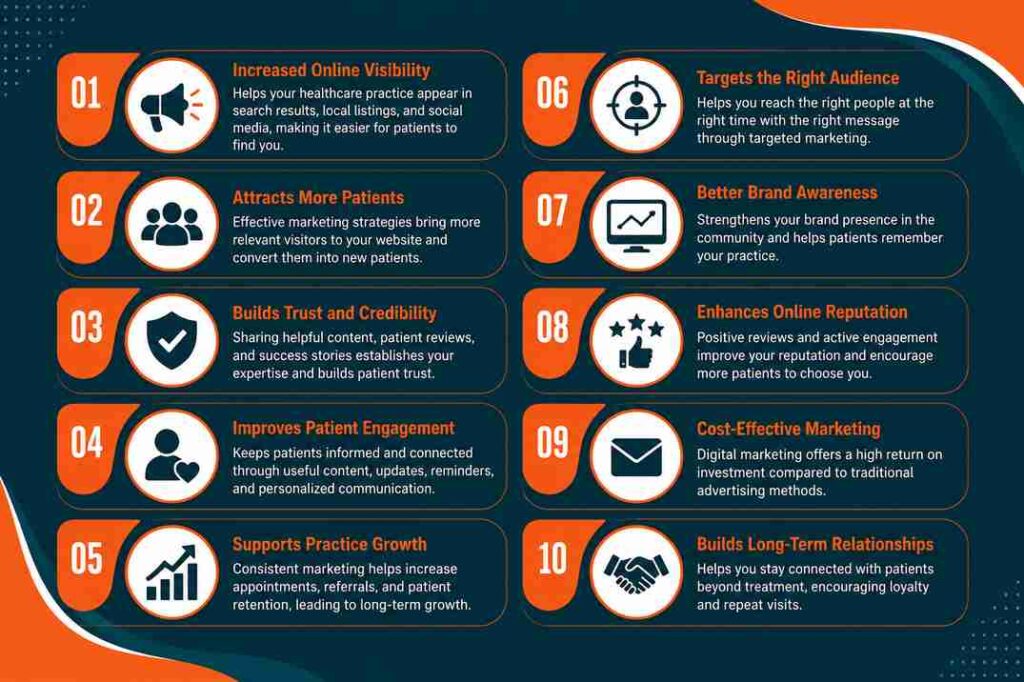
Healthcare marketing creates value for both providers and patients.
Increased Online Visibility
Most patients begin their healthcare journey with an online search.
Healthcare marketing improves visibility through:
- Search engine optimization (SEO)
- Local search optimization
- Google Business Profile management
- Content marketing
- Social media engagement
Greater visibility leads to increased patient inquiries.
Builds Patient Trust
Trust remains one of the most important factors in healthcare.
Marketing helps establish trust by providing:
- Accurate medical information
- Transparent communication
- Professional branding
- Authentic patient testimonials
- Educational resources
Patients are more likely to choose providers they perceive as knowledgeable and reliable.
Better Patient Education
Educational healthcare marketing empowers patients to make informed decisions.
Examples include:
- Health awareness blogs
- Preventive care guides
- Frequently asked questions
- Treatment explanations
- Wellness tips
Well-informed patients often experience greater confidence during their healthcare journey.
Improves Patient Engagement
Healthcare marketing creates ongoing communication beyond appointments.
Patient engagement improves through:
- Email newsletters
- Health campaigns
- Preventive reminders
- Social media updates
- Educational videos
Engaged patients are more likely to return for follow-up care and recommend providers to others.
Supports Practice Growth
Sustainable growth depends on attracting new patients while retaining existing ones.
Healthcare marketing contributes by:
- Increasing appointment requests
- Strengthening patient relationships
- Improving online reputation
- Expanding community awareness
- Encouraging referrals
Growth becomes more consistent through long-term marketing strategies rather than relying solely on word-of-mouth.
Types of Healthcare Marketing
Different healthcare organizations use different marketing channels depending on their goals.
Search Engine Optimization (SEO)
SEO helps healthcare websites rank higher in search engine results when patients search for healthcare services.
Benefits include:
- More website visitors
- Better local visibility
- Increased organic traffic
- Higher appointment inquiries
Content Marketing
Content marketing focuses on educating patients through valuable information.
Examples include:
- Health blogs
- Treatment guides
- Patient FAQs
- Preventive care articles
- Wellness resources
Quality content positions healthcare providers as trusted sources of information.
Social Media Marketing
Social media allows providers to engage directly with patients.
Common content includes:
- Health tips
- Awareness campaigns
- Patient education
- Clinic updates
- Community events
Consistent social media activity helps maintain visibility and strengthen relationships.
Email Marketing
Email remains an effective communication channel for healthcare providers.
Emails can include:
- Appointment reminders
- Health newsletters
- Preventive care advice
- Seasonal health campaigns
- Educational resources
Local Healthcare Marketing
Patients usually search for healthcare services nearby.
Local marketing includes:
- Google Business Profile optimization
- Location-based SEO
- Local citations
- Community outreach
- Local awareness campaigns
Local visibility significantly increases patient inquiries.
Common Challenges Without Healthcare Marketing
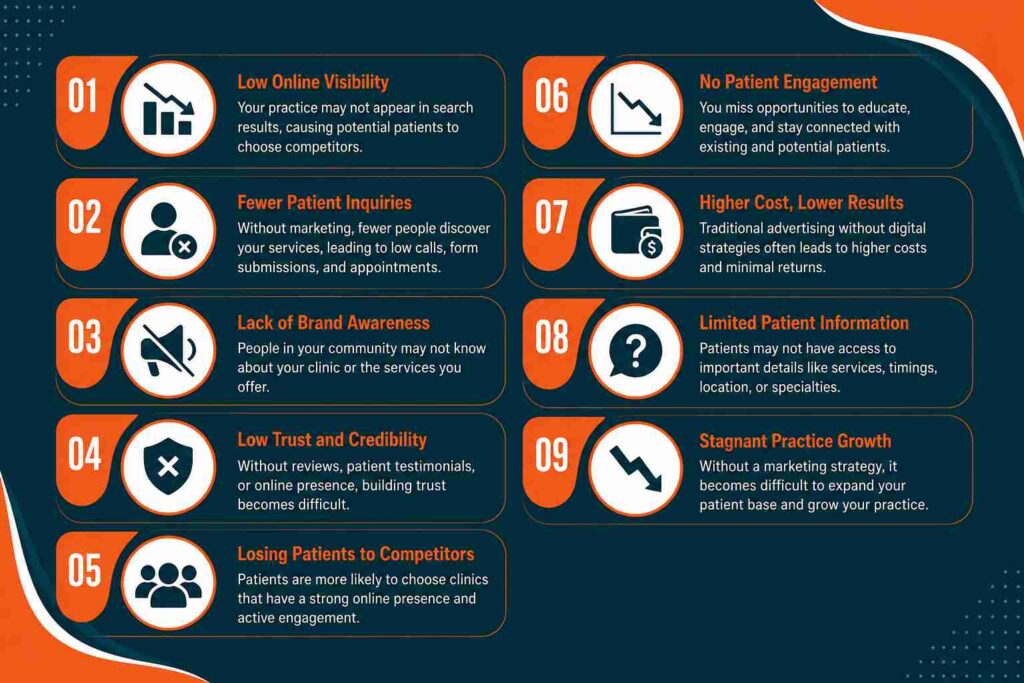
Healthcare providers who avoid marketing often experience:
- Low online visibility
- Fewer patient inquiries
- Limited community awareness
- Increased competition
- Poor search rankings
- Weak digital reputation
- Reduced patient engagement
Even highly experienced healthcare professionals may struggle to reach new patients without effective communication strategies.
Advanced Healthcare Marketing Strategies
Healthcare marketing continues to evolve as patient expectations and technology change. Providers that adopt modern marketing strategies can strengthen their online presence while maintaining ethical communication and patient trust.
Develop a Patient-Friendly Website
A healthcare website is often the first interaction a patient has with a provider. A professional website should be informative, easy to navigate, and optimized for both desktop and mobile devices.
Important website features include:
- Clear service pages
- Online appointment booking
- Contact information
- Doctor and staff profiles
- Frequently asked questions
- Patient testimonials
- Fast loading speed
- Secure browsing (HTTPS)
A well-designed website creates a positive first impression and improves patient confidence.
Focus on Local SEO
Many patients search for healthcare providers near their location. Local SEO helps clinics and hospitals appear in relevant local search results.
Best practices include:
- Optimizing your Google Business Profile
- Maintaining accurate contact information
- Collecting genuine patient reviews
- Using location-based keywords naturally
- Publishing locally relevant content
Local SEO helps attract patients who are actively searching for nearby healthcare services.
Create Educational Content
Patients appreciate providers who educate rather than simply promote their services.
Useful educational content includes:
- Disease prevention tips
- Treatment explanations
- Recovery guidelines
- Healthy lifestyle advice
- Frequently asked questions
- Seasonal healthcare awareness articles
Educational content builds credibility while improving search engine rankings.
Encourage Patient Reviews
Online reviews significantly influence patient decisions.
Encourage satisfied patients to leave honest feedback after receiving quality care. Respond professionally to both positive and negative reviews while maintaining patient confidentiality.
Positive reviews improve:
- Trust
- Reputation
- Local SEO
- Patient confidence
- Conversion rates
Use Video Marketing
Videos simplify complex healthcare topics and improve patient understanding.
Examples include:
- Health awareness videos
- Clinic introductions
- Frequently asked questions
- Preventive care tips
- Treatment overviews
Short educational videos often receive higher engagement than text alone.
Tips for Effective Healthcare Marketing
Healthcare marketing should always prioritize patient needs over promotional messaging.
Some practical tips include:
- Publish accurate medical information.
- Keep website content updated regularly.
- Use clear and simple language.
- Focus on patient education.
- Maintain consistent branding.
- Monitor website performance.
- Improve website speed.
- Stay active on social media.
- Encourage genuine patient feedback.
- Continuously evaluate marketing results.
Consistency is often more effective than occasional promotional campaigns.
Common Mistakes to Avoid
Healthcare providers should avoid marketing practices that reduce trust or create confusion.
Common mistakes include:
- Using misleading claims
- Publishing outdated information
- Ignoring patient reviews
- Inconsistent branding
- Poor website usability
- Overly promotional messaging
- Neglecting SEO
- Failing to update business listings
- Posting irregularly on social media
- Not measuring marketing performance
Avoiding these mistakes helps maintain a professional image and strengthens patient relationships.
Future of Healthcare Marketing
Healthcare marketing continues to evolve with technology and changing patient expectations.
Emerging trends include:
Artificial Intelligence
AI assists with:
- Patient communication
- Personalized content
- Chatbots
- Appointment scheduling
- Data analysis
Voice Search Optimization
More patients now use voice assistants to search for healthcare information.
Optimizing content for conversational searches improves visibility.
Personalized Patient Experiences
Healthcare organizations increasingly use personalized communication to improve patient satisfaction.
Examples include:
- Customized health reminders
- Personalized educational resources
- Targeted wellness campaigns
Data-Driven Marketing
Healthcare organizations now analyze performance data to improve marketing decisions.
Important metrics include:
- Website traffic
- Appointment conversions
- Search rankings
- Patient engagement
- Return on investment
Using data helps providers continuously improve their marketing strategies.
Conclusion
Understanding Who Needs Healthcare Marketing is essential for every modern healthcare organization. From independent clinics and diagnostic centers to multi-specialty hospitals and wellness providers, healthcare marketing helps build visibility, establish trust, educate patients, and support sustainable growth.
Rather than focusing only on promotion, effective healthcare marketing emphasizes patient education, ethical communication, and long-term relationships. Organizations that invest in professional websites, quality content, local SEO, and patient engagement are better positioned to meet today’s patient expectations and remain competitive.
Whether serving patients in Thrissur or expanding to broader communities, embracing Who Needs Healthcare Marketing as a strategic priority enables healthcare providers to deliver valuable information, improve accessibility, and foster lasting patient confidence. For additional insights into ethical healthcare communication and patient engagement, refer to the World Health Organization (WHO) health promotion resources.
Frequently Asked Questions
Who needs healthcare marketing
Healthcare marketing benefits hospitals, clinics, diagnostic centers, dental practices, specialty medical centers, physiotherapy clinics, wellness centers, and individual healthcare providers looking to improve visibility and patient engagement.
Why is healthcare marketing important
Healthcare marketing helps providers educate patients, build trust, increase online visibility, strengthen their reputation, and attract new patients through ethical communication.
How does healthcare marketing improve patient trust
By providing accurate health information, maintaining transparency, encouraging genuine reviews, and communicating consistently, healthcare marketing builds credibility and confidence among patients.
Is healthcare marketing only for large hospitals
No. Small clinics, independent practitioners, diagnostic centers, dental clinics, and wellness providers also benefit significantly from healthcare marketing.
What is digital healthcare marketing
Digital healthcare marketing involves using websites, SEO, social media, email marketing, online advertising, and educational content to connect with patients online.
How does SEO help healthcare providers
SEO improves search engine visibility, helping patients find healthcare services more easily when searching online for treatments or providers.
What role does social media play in healthcare marketing
Social media helps healthcare organizations share educational content, health awareness campaigns, clinic updates, and interact with patients professionally.
Can healthcare marketing improve patient retention
Yes. Regular communication, educational resources, appointment reminders, and engaging content help strengthen long-term patient relationships.
What are the biggest challenges without healthcare marketing
Healthcare providers may experience low online visibility, fewer patient inquiries, reduced brand awareness, weaker search rankings, and limited community engagement.
What makes healthcare marketing successful
Success depends on patient-focused communication, high-quality educational content, ethical practices, local SEO, responsive websites, positive patient experiences, and consistent performance evaluation.

