
7 Powerful Reasons Why Medical SEO Is Important for Doctors!
Patients today do not always choose a doctor only through word-of-mouth. Many of them first search online for symptoms, treatments, specialists, clinic timings, and trusted healthcare providers nearby. This is exactly Why Medical SEO Is Important for Doctors in Kerala and beyond. Medical SEO helps doctors appear in front of patients when they are actively looking for healthcare support.
A strong online presence is no longer optional for doctors, clinics, and healthcare practices. Even if a doctor has excellent experience, advanced facilities, and good patient care, people may not find the practice if the website is not visible on search engines. That is Why Medical SEO Is Important for Doctors who want to build trust, reach more patients, and grow steadily.
What Does Medical SEO Mean?
Medical SEO means search engine optimization for healthcare websites. It focuses on improving a doctor’s website so that it can appear higher in search results when patients search for medical services.
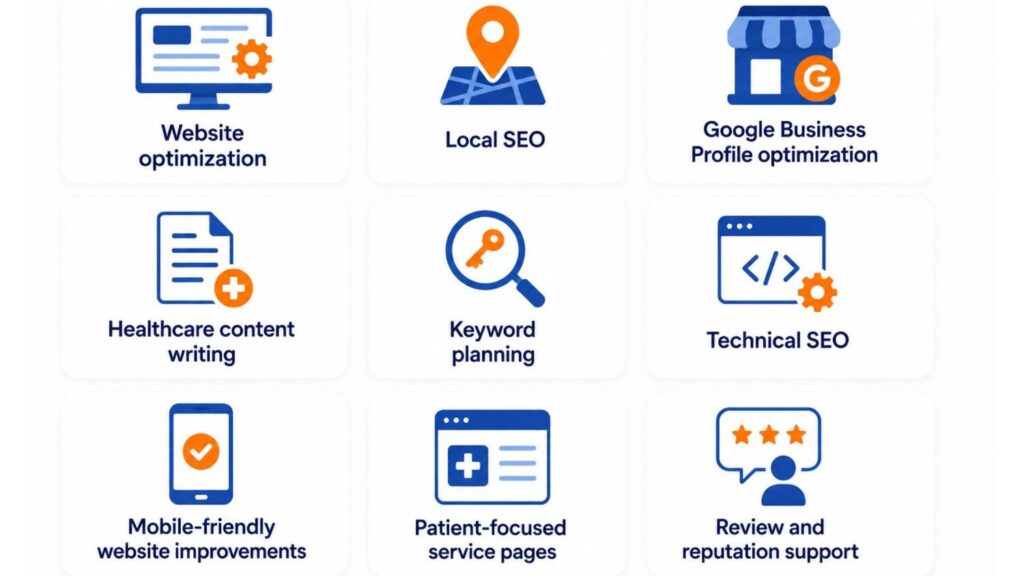
Medical SEO includes:
- Website optimization
- Local SEO
- Google Business Profile optimization
- Healthcare content writing
- Keyword planning
- Technical SEO
- Mobile-friendly website improvements
- Patient-focused service pages
- Review and reputation support
Unlike general SEO, medical SEO needs more care because healthcare content must be accurate, trustworthy, and easy for patients to understand.
Why Medical SEO Is Important for Doctors Today
The main reason Why Medical SEO Is Important for Doctors is simple: patients search before they book. They may search for a doctor near them, a treatment option, a symptom explanation, or a clinic that offers a specific medical service.
When a doctor’s website appears in these searches, it creates more chances for patient enquiries, appointment bookings, and brand trust. SEO helps doctors become more visible at the right time, in front of the right audience.
Medical SEO is also important because healthcare decisions are sensitive. Patients want to feel confident before choosing a doctor. A well-optimized website with helpful content, clear service information, location details, FAQs, and patient-friendly language can make that decision easier.
Common Causes of Poor Online Visibility for Doctors
Many doctors have websites, but not all websites perform well on Google. Poor visibility usually happens because of weak optimization.
1. Poor Website Structure
If a website is difficult to navigate, patients may leave quickly. Search engines also find it harder to understand the website.
Common issues include:
- Confusing menu structure
- Missing service pages
- Broken links
- Slow-loading pages
- Poor mobile experience
2. Lack of Patient-Friendly Content
Patients search for answers before booking consultations. If the website does not explain treatments, conditions, procedures, and doctor expertise clearly, it may miss valuable traffic.
3. Weak Local SEO
Most patients prefer doctors near their location. If local SEO is not done properly, a clinic may not appear for searches like “doctor near me” or “specialist near me.”
4. Missing Keyword Strategy
Doctors may have good content, but if it does not use the right keywords naturally, search engines may not rank it for relevant patient searches.
5. Poor Google Business Profile Optimization
A doctor’s Google Business Profile plays a major role in local search visibility. Incorrect details, missing photos, weak descriptions, or fewer reviews can affect patient trust.
Symptoms of a Weak Medical SEO Strategy
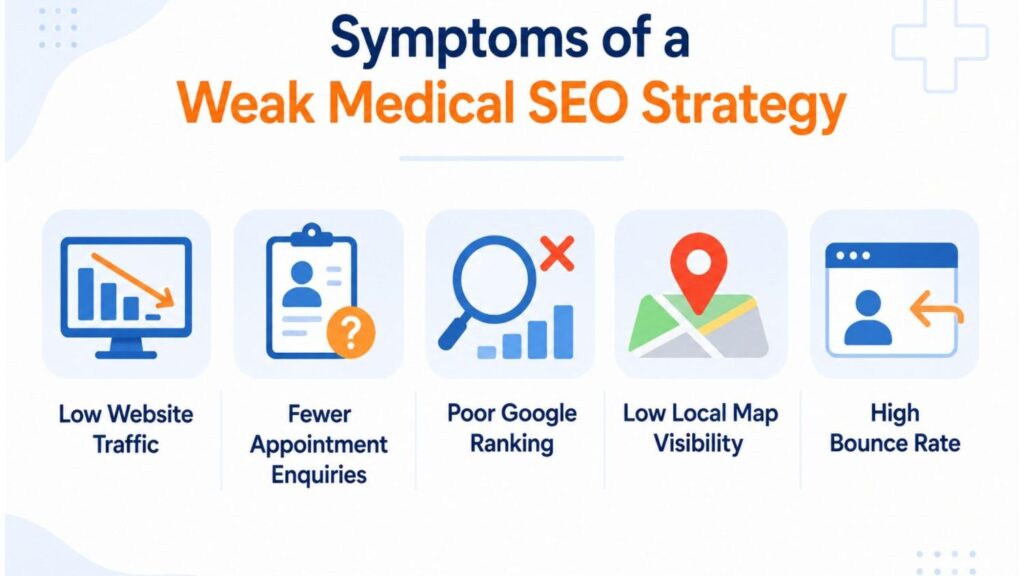
Doctors can identify weak SEO performance through some common signs.
- Low Website Traffic
If very few people visit the website, it may mean the pages are not ranking well for important medical searches.
- Fewer Appointment Enquiries
A website may look good, but if it does not bring patient enquiries, it needs better SEO and conversion improvements.
- Poor Google Ranking
If the website does not appear on the first page for relevant services, competitors may get more visibility.
- Low Local Map Visibility
If the clinic does not appear in Google Maps results, local patients may not discover it easily.
- High Bounce Rate
If visitors leave quickly, the website content, speed, layout, or user experience may need improvement.
Why Medical SEO Is Important for Doctors With Private Practices
Private practice doctors need a steady flow of patient enquiries. Medical SEO helps them build visibility without depending only on referrals or paid advertisements.
A doctor’s website can work like a digital front desk. It can explain services, answer common questions, show clinic details, share appointment information, and guide patients toward the next step.
This is another reason Why Medical SEO Is Important for Doctors who want consistent growth in a competitive healthcare market.
Medical SEO Treatments and Solutions
Just like health concerns need the right treatment plan, weak online visibility also needs the right SEO treatment.
Website Audit
A medical SEO audit checks the current condition of the website. It identifies problems related to speed, content, keywords, mobile performance, technical setup, and rankings.
Keyword Optimization
Keyword optimization helps the website target the phrases patients actually search for. These may include treatment names, doctor specialties, symptoms, and location-based terms.
Service Page Optimization
Each medical service should have a dedicated page. For example, a dermatologist may need separate pages for acne treatment, pigmentation treatment, skin rejuvenation, and hair loss treatment.
Blog Content Creation
Blogs help answer patient questions and improve search visibility. Topics can include symptoms, prevention tips, treatment options, recovery guidance, and FAQs.
Local SEO Improvements
Local SEO treatments include improving Google Business Profile details, adding accurate contact information, using local keywords, collecting patient reviews ethically, and improving map visibility.
Technical Fixes
Technical fixes may include improving page speed, making the website mobile-friendly, fixing broken links, adding schema markup, and improving crawlability.
Role of Content in Medical SEO
Content is one of the strongest parts of medical SEO. Patients want answers before they take action. A doctor’s website should provide useful information without confusing them.
Effective medical content may include:
- Treatment explanations
- Condition guides
- Recovery tips
- Preventive care advice
- Service pages
- Doctor profile content
- Blog articles
- FAQs
Good content helps search engines understand the website. It also helps patients feel more comfortable before contacting the clinic.
Common Medical SEO Mistakes to Avoid
Doctors and healthcare practices should avoid common SEO mistakes that can affect performance.
These mistakes include:
- Keyword stuffing
- Copying content from other websites
- Ignoring local SEO
- Not updating Google Business Profile
- Using medical jargon without explanation
- Having slow website pages
- Not optimizing for mobile users
- Publishing thin content
- Ignoring patient FAQs
- Not tracking SEO performance
Avoiding these mistakes helps build a stronger and more reliable SEO foundation.
Conclusion
Why Medical SEO Is Important for Doctors comes down to visibility, trust, and patient connection. A doctor may offer excellent care, but if patients cannot find the practice online, opportunities may be missed. Medical SEO helps improve search rankings, website traffic, local visibility, and patient confidence.
A strong medical SEO strategy includes website optimization, local SEO, content creation, technical improvements, and a better user experience. It helps doctors present their services clearly and reach people who are already searching for healthcare support.
For doctors in Kerala, medical SEO can create a stronger digital presence and support steady practice growth in a patient-focused way. That is Why Medical SEO Is Important for Doctors who want to remain visible, trusted, and accessible in today’s digital healthcare world.
For more information about search engine optimization best practices, visit Google’s SEO Starter Guide.

