
11 Proven Medical SEO Ranking Factors for Healthcare Growth!
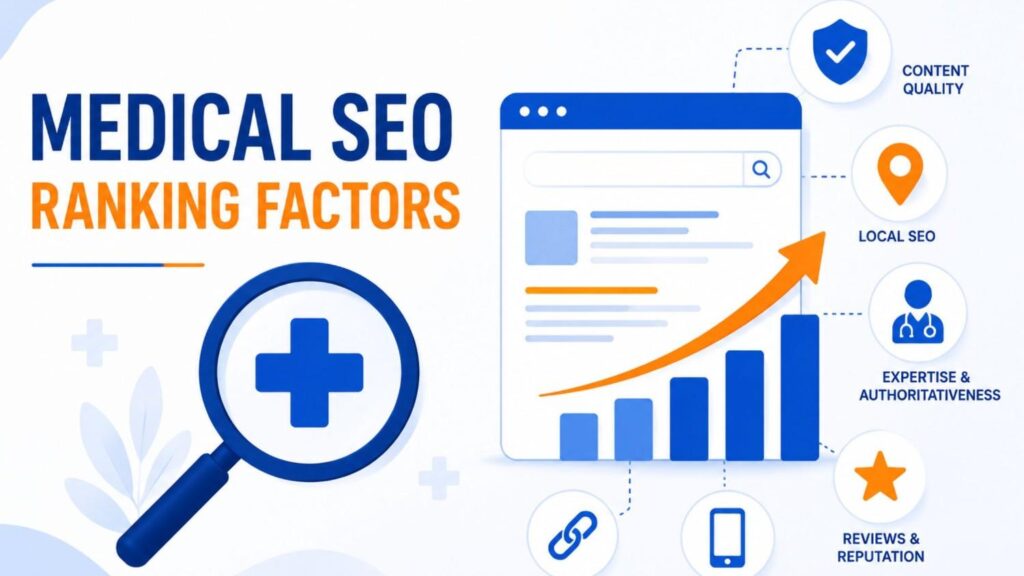
Medical SEO Ranking Factors play an important role in helping doctors, clinics, hospitals, and healthcare organizations appear in search results when patients look for trusted medical information. In today’s digital healthcare space, patients often search online before choosing a doctor, treatment, or clinic. That is why understanding Medical SEO Ranking Factors can help healthcare websites improve visibility, build trust, and attract the right audience through organic search.
Medical SEO is not just about adding keywords to a page. It involves website structure, content quality, local SEO, technical performance, patient trust signals, mobile experience, and reputation management. When these elements work together, a healthcare website becomes easier for both search engines and patients to understand.
What Are Medical SEO Ranking Factors?
Medical SEO Ranking Factors are the important elements search engines consider when deciding where a healthcare website should appear in search results. These factors help search engines understand whether a medical website is useful, reliable, fast, secure, and relevant to patient searches.
For healthcare websites, ranking factors are especially important because medical content must be accurate, trustworthy, and easy to understand. A patient searching for symptoms, treatments, specialists, or clinics needs helpful information, not confusing or poorly written content.
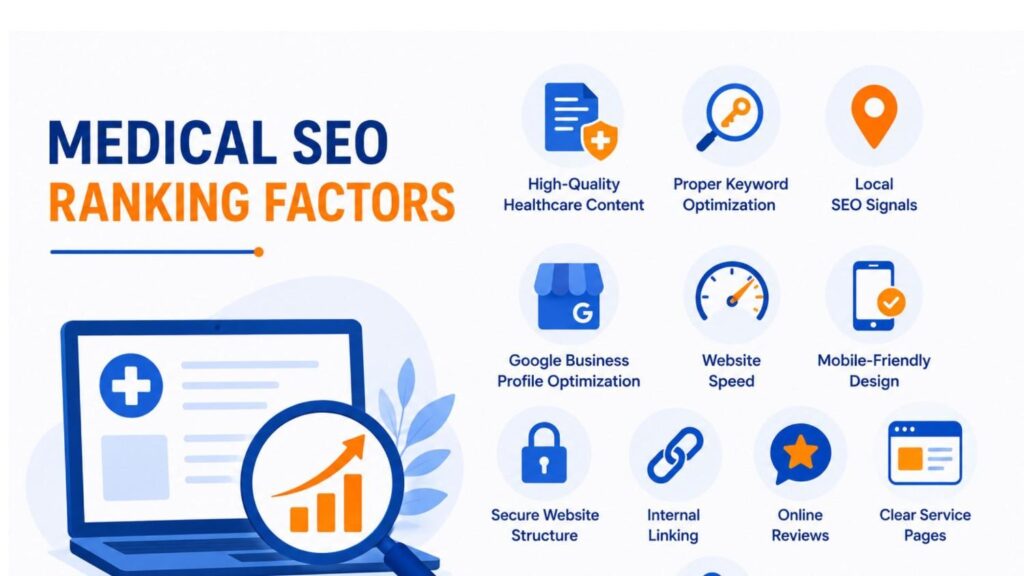
Common Medical SEO Ranking Factors include:
- High-quality healthcare content
- Proper keyword optimization
- Local SEO signals
- Google Business Profile optimization
- Website speed
- Mobile-friendly design
- Secure website structure
- Internal linking
- Online reviews
- Clear service pages
- User-friendly navigation
Why Medical SEO Ranking Factors Matter for Healthcare Websites
Healthcare decisions are personal and sensitive. Patients want clear answers, reliable information, and trusted providers. Medical SEO Ranking Factors help healthcare websites meet these expectations.
A well-optimized medical website can:
- Improve search engine visibility
- Attract patients searching for specific services
- Build credibility through helpful content
- Support local patient discovery
- Improve user experience
- Increase appointment inquiries
- Strengthen long-term digital presence
Without proper optimization, even a good healthcare website may not reach the right audience. Search engines need clear signals to understand what the website offers and why it is useful for users.
Main Causes of Poor Medical SEO Performance
Many healthcare websites struggle to rank because they miss basic SEO requirements. Understanding these issues helps identify what needs improvement.
- Weak Website Content
Content that is too short, outdated, or unclear may not perform well. Patients need detailed explanations about conditions, treatments, symptoms, procedures, and care options.
- Poor Local SEO Setup
Healthcare services are usually location-based. If a clinic does not optimize for local search, nearby patients may not find it easily.
- Slow Website Speed
A slow website can affect both user experience and search rankings. Patients may leave if pages take too long to load.
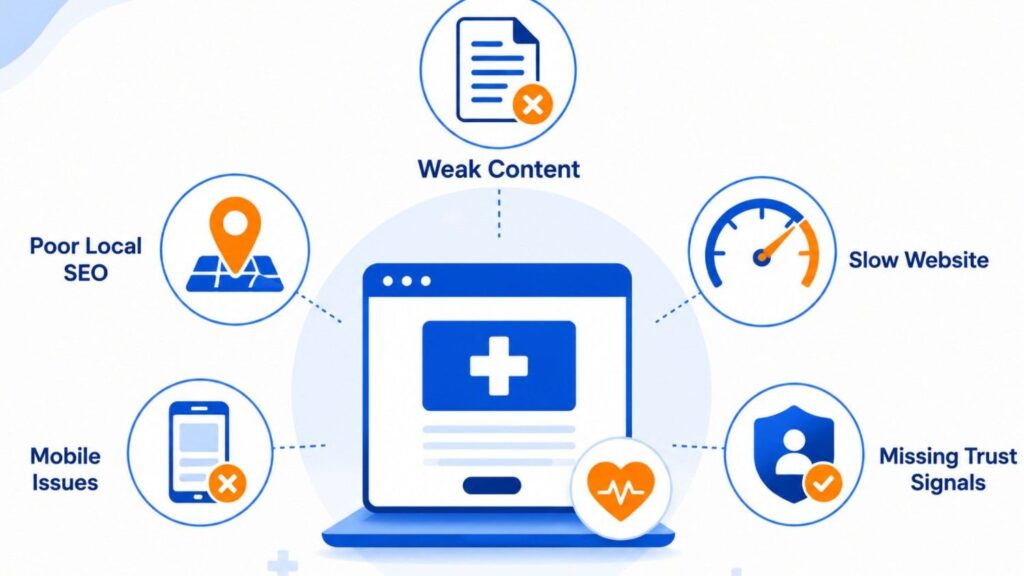
- Poor Mobile Experience
Many patients search for healthcare services using mobile phones. A website that does not work well on mobile can lose valuable traffic.
- Missing Trust Signals
Healthcare websites need trust-building elements such as doctor profiles, service details, contact information, reviews, and clear educational content.
Types of Medical SEO Ranking Factors
Medical SEO Ranking Factors can be grouped into different types. Each type supports website performance in a different way.
On-Page SEO Factors
On-page SEO focuses on improving individual website pages. This includes titles, headings, meta descriptions, keyword usage, image alt text, and internal links.
Important on-page factors include:
- Clear H1 and H2 headings
- Natural keyword placement
- Helpful page content
- Optimized images
- Internal links to related pages
- Clean URL structure
Technical SEO Factors
Technical SEO helps search engines crawl, index, and understand a website properly.
Key technical factors include:
- Fast loading speed
- HTTPS security
- Mobile responsiveness
- XML sitemap
- Proper redirects
- No broken links
- Clean website structure
Local and Content SEO Factors
Local and content SEO work together to improve healthcare website visibility. Local SEO helps clinics, doctors, and hospitals appear in nearby patient searches, while content SEO provides useful information that answers patient questions.
These factors may include:
- Google Business Profile optimization
- Accurate name, address, and phone number
- Location-based keywords
- Patient reviews
- Local landing pages
- Blog articles
Reputation and Trust Factors
Trust is very important in healthcare SEO. Search engines and users both look for signals that show a medical website is reliable.
Trust factors include:
- Doctor credentials
- Patient reviews
- Updated content
- Clear contact details
- Professional website design
- Accurate medical information
11 Important Medical SEO Ranking Factors
1. High-Quality Medical Content
Quality content is one of the most powerful Medical SEO Ranking Factors. Healthcare content should be clear, helpful, accurate, and patient-friendly.
Good content answers common patient questions such as:
- What is the condition?
- What are the symptoms?
2. Proper Keyword Optimization
Keyword optimization helps search engines understand the topic of a page. The keyword Medical SEO Ranking Factors should be used naturally in the title, headings, introduction, body content, and conclusion.
3. Strong Local SEO
Local SEO helps healthcare providers appear when patients search for nearby medical services. This is important because most patients prefer clinics, hospitals, and doctors that are easy to access.
Local SEO can be improved through:
- Location pages
- Google Business Profile updates
- Local keywords
4. Google Business Profile Optimization
A complete Google Business Profile can improve local search visibility. It should include correct business details, service categories, working hours, photos, contact numbers, and regular updates.
For healthcare providers, this profile often becomes the first point of contact for patients.
5. Mobile-Friendly Website Design
Mobile usability is one of the key Medical SEO Ranking Factors. A website should work smoothly on smartphones and tablets.
A mobile-friendly medical website should have:
- Easy navigation
- Clickable phone numbers
- Fast-loading pages
6. Website Speed and Performance
Patients do not want to wait for slow pages. Website speed affects user experience and SEO performance.
To improve speed:
- Compress images
- Use lightweight design
- Remove unnecessary plugins
7. Secure Website with HTTPS
Security is important for every website, especially healthcare websites. HTTPS helps protect user data and builds trust.
A secure website gives patients confidence while browsing services, reading information, or submitting contact forms.
8. User Experience and Navigation
A healthcare website should be easy to use. Patients should quickly find doctors, services, contact details, location, appointment options, and treatment information.
Good navigation reduces confusion and improves engagement.
9. Internal Linking Structure
Internal links help users move from one page to another. They also help search engines understand the relationship between pages.
For example, a blog about healthcare SEO can link to pages about Medical SEO Services, Medical SEO Strategy, local SEO, and technical SEO.
10. Patient Reviews and Reputation
Reviews can influence patient decisions. Positive and genuine reviews help build trust and support local SEO performance.
Healthcare providers should encourage patients to share honest feedback and respond politely to reviews.
11. Regular Website Updates
Search engines prefer websites that stay active and updated. Regular blogs, updated service pages, new FAQs, and fresh content can improve Medical SEO Ranking Factors over time.
Outdated content may reduce trust and performance.
Benefits of Improving Medical SEO Ranking Factors
Improving Medical SEO Ranking Factors can bring long-term benefits for healthcare providers.
- Better Online Visibility
A well-optimized website has a better chance of appearing in search results for relevant healthcare queries.
- More Qualified Website Visitors
SEO attracts users who are already searching for medical services, symptoms, treatments, or healthcare information.
- Stronger Patient Trust
Helpful content, reviews, doctor details, and secure website design help patients feel more confident.
- Improved Local Reach
Local SEO helps nearby patients discover clinics and healthcare providers more easily.
- Long-Term Growth
Unlike paid ads, SEO can continue supporting visibility over time when maintained properly.
Treatment: How to Fix Weak Medical SEO Ranking Factors
Healthcare SEO issues can be improved with a structured plan.
- Perform an SEO Audit
Start by checking website speed, mobile performance, content quality, keyword usage, technical errors, and local visibility.
- Improve Service Pages
Each medical service should have a clear page explaining the treatment, benefits, process, FAQs, and consultation details.
- Create Helpful Blog Content
Blogs help answer patient questions and target long-tail keywords. This improves content depth and search visibility.
- Optimize Technical SEO
Fix slow pages, broken links, missing meta tags, indexing issues, and mobile errors.
- Strengthen Local SEO
Update Google Business Profile, add location-based pages, collect reviews, and maintain consistent contact information.
Tips to Improve Medical SEO Ranking Factors
Here are simple tips to improve Medical SEO Ranking Factors:

Conclusion
Medical SEO Ranking Factors are essential for healthcare websites that want to improve visibility, attract the right patients, and build long-term trust online. A successful SEO strategy includes high-quality content, technical optimization, local SEO, mobile performance, patient reviews, secure browsing, and user-friendly website structure.
By focusing on Medical SEO Ranking Factors consistently, healthcare providers can create a stronger digital presence and make it easier for patients to find helpful medical information and relevant services. With regular updates and a clear optimization plan, medical websites can improve rankings, support patient engagement, and achieve sustainable online growth.
For more information about search engine optimization best practices, visit Google’s SEO Starter Guide.

