
Medical SEO Process: A Step-by-Step Guide for Healthcare Website Growth

With more patients searching online for healthcare providers, treatments, and medical information, having a strong online presence has become essential. A well-structured Medical SEO process helps healthcare organizations improve search visibility, attract qualified patients, and strengthen their digital reputation.
The Medical SEO process involves a series of strategic steps designed to optimize healthcare websites for search engines and users. From keyword research and content creation to technical improvements and local SEO, each stage plays an important role in improving online performance and patient engagement.
Table of Contents
- What Is the Medical SEO Process?
- Why the Medical SEO Process Matters
- Website Analysis and SEO Audit
- Keyword Research and Planning
- Competitor Analysis
- Content Optimization
- Technical SEO Implementation
- Local SEO Optimization
- Mobile Optimization and User Experience
- Content Creation and Marketing
- Performance Monitoring and Reporting
- Common Medical SEO Process Mistakes
- Continuous SEO Improvement
- Conclusion
- Frequently Asked Question
What Is the Medical SEO Process?
The Medical SEO process refers to the systematic approach used to improve the visibility of healthcare websites in search engine results.
The process typically includes:
- Website auditing
- Keyword research
- Content optimization
- Technical SEO
- Local SEO
- Performance tracking
Each step helps healthcare providers improve search rankings and connect with patients searching for medical services online.
Why the Medical SEO Process Matters
Patients increasingly rely on search engines before choosing healthcare providers.
A structured Medical SEO Process helps healthcare organizations:
- Improve search visibility
- Attract qualified traffic
- Increase patient inquiries
- Build credibility
- Strengthen local presence
- Support long-term growth
Without a clear process, SEO efforts may produce inconsistent results. These outcomes are often achieved through comprehensive healthcare SEO services that combine strategy, optimization, and ongoing performance improvement.
Website Analysis and SEO Audit
The first stage of the Medical SEO Process involves evaluating the current website performance.
An SEO audit may assess:
- Website speed
- Mobile responsiveness
- Content quality
- Technical issues
- User experience
- Search engine indexing
This analysis helps identify areas that require improvement.
Keyword Research and Planning
Keyword research is a critical step in the Medical SEO Process.
Healthcare providers should identify keywords related to:
- Medical services
- Treatments
- Specialties
- Patient concerns
- Local healthcare searches
Examples include:
- Dentist near me
- Dermatology treatment
- Cardiology clinic
- Pediatric specialist
Effective keyword planning helps target the right audience.
Competitor Analysis
Understanding competitor performance can provide valuable SEO insights.
Competitor analysis may include:
- Keyword evaluation
- Content review
- Backlink assessment
- Local search presence
- Website structure comparison
Studying competitors helps identify opportunities for improvement.
Content Optimization
Content plays a major role in healthcare SEO success.
Content optimization includes:
- Updating service pages
- Improving readability
- Adding relevant keywords
- Creating informative healthcare content
- Enhancing internal linking
Optimized content helps search engines better understand website topics and improves user engagement.

Local SEO Optimization
Many healthcare searches have local intent.
Local SEO may involve:
- Google Business Profile optimization
- Location-specific content
- Consistent contact information
- Local citations
- Review management
Local optimization helps healthcare providers appear in nearby search results and attract local patients.
Mobile Optimization and User Experience
A large percentage of healthcare searches occur on mobile devices.
Healthcare websites should provide:
- Responsive design
- Fast mobile loading speeds
- Easy navigation
- Accessible content
- User-friendly appointment forms
Mobile optimization improves both engagement and search performance.
Content Creation and Marketing
Content creation is an ongoing part of the Medical SEO Process.
Effective content may include:
- Healthcare blogs
- Treatment guides
- Patient education resources
- FAQ pages
- Awareness articles
Regular content updates help improve visibility and establish authority.
Performance Monitoring and Reporting
SEO performance should be monitored regularly.
Important metrics include:
- Organic traffic
- Keyword rankings
- Website engagement
- Local visibility
- Conversion rates
- Appointment inquiries
Tracking performance helps healthcare organizations measure success and identify improvement opportunities.
Continuous SEO Improvement
SEO is not a one-time activity.
Healthcare websites should regularly:
- Update content
- Monitor rankings
- Improve technical performance
- Expand keyword coverage
- Optimize user experience
Continuous improvement helps maintain strong search visibility and adapt to changing search trends.
Conclusion
The Medical SEO Process provides a structured framework for improving healthcare website visibility, attracting qualified patients, and achieving sustainable online growth. By following key steps such as website audits, keyword research, content optimization, technical SEO, local SEO, and performance monitoring, healthcare providers can strengthen their digital presence and improve search engine rankings.
A successful healthcare SEO strategy requires ongoing refinement and optimization. Organizations that consistently follow the Medical SEO Process are better positioned to compete online, build credibility, and connect with patients searching for healthcare services.
For more information about SEO best practices, visit Google’s SEO Starter Guide.
Frequently Asked Questions
How long does the Medical SEO Process take to show results?
The timeline varies depending on website condition, competition, and optimization efforts. Most healthcare websites begin to see noticeable improvements in search visibility and traffic within a few months of implementing a consistent Medical SEO Process.
Why is the Medical SEO Process important?
It helps healthcare providers improve online visibility, attract patients, and support long-term digital growth.
What is the first step in the Medical SEO Process?
The process typically begins with a website analysis and SEO audit to identify areas for improvement.
Why is keyword research important in Medical SEO?
Keyword research helps healthcare websites target searches that potential patients are actively using.
How does local SEO fit into the Medical SEO Process?
Local SEO helps healthcare providers appear in location-based searches and attract nearby patients.
Does content creation play a role in Medical SEO?
Yes. High-quality content improves search visibility, patient engagement, and website authority.
Why is technical SEO important?
Technical SEO helps search engines crawl, index, and understand healthcare websites effectively.
How can healthcare providers measure SEO success?
They can monitor traffic, rankings, conversions, engagement metrics, and local search performance.
What are common Medical SEO Process mistakes?
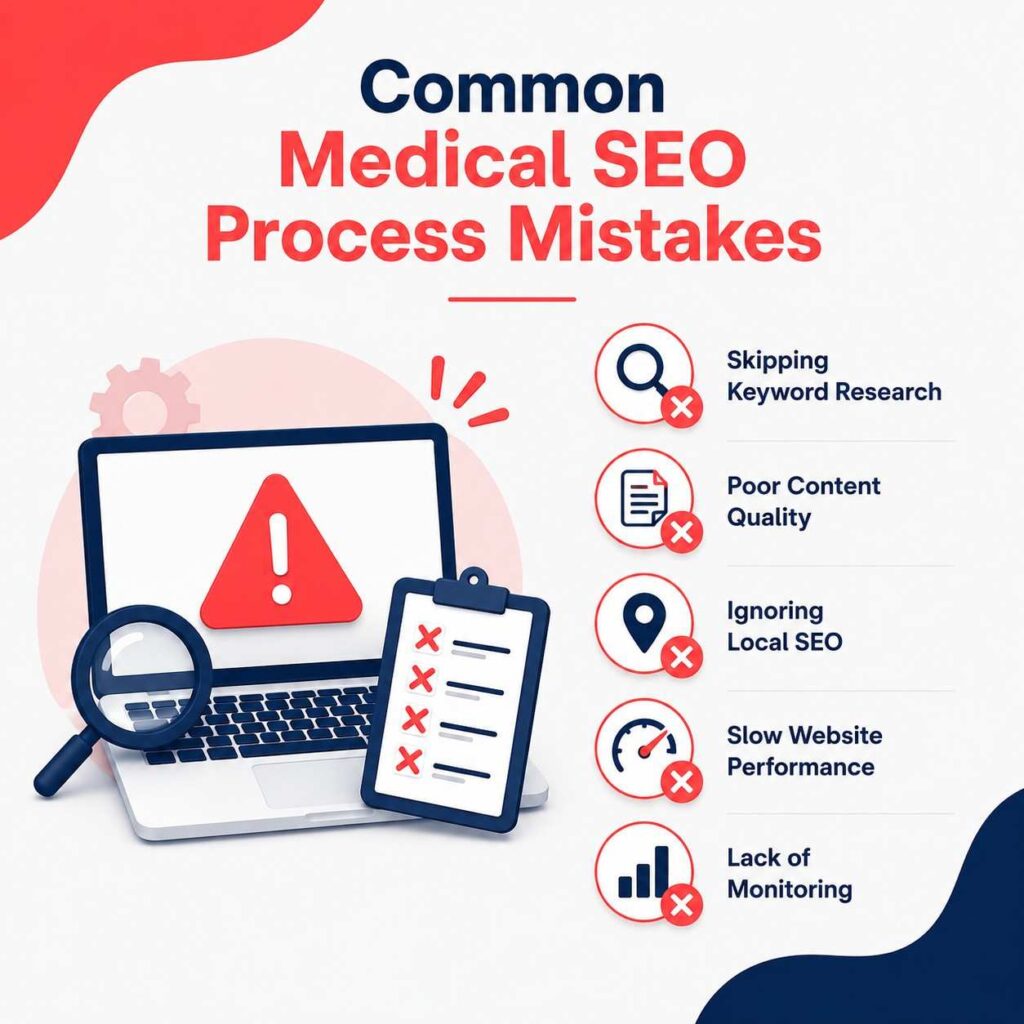
Common mistakes include poor content, weak local SEO, slow websites, and lack of performance tracking.
Is the Medical SEO Process a one-time activity?
No. SEO requires ongoing optimization, monitoring, and content updates to maintain strong results.

