
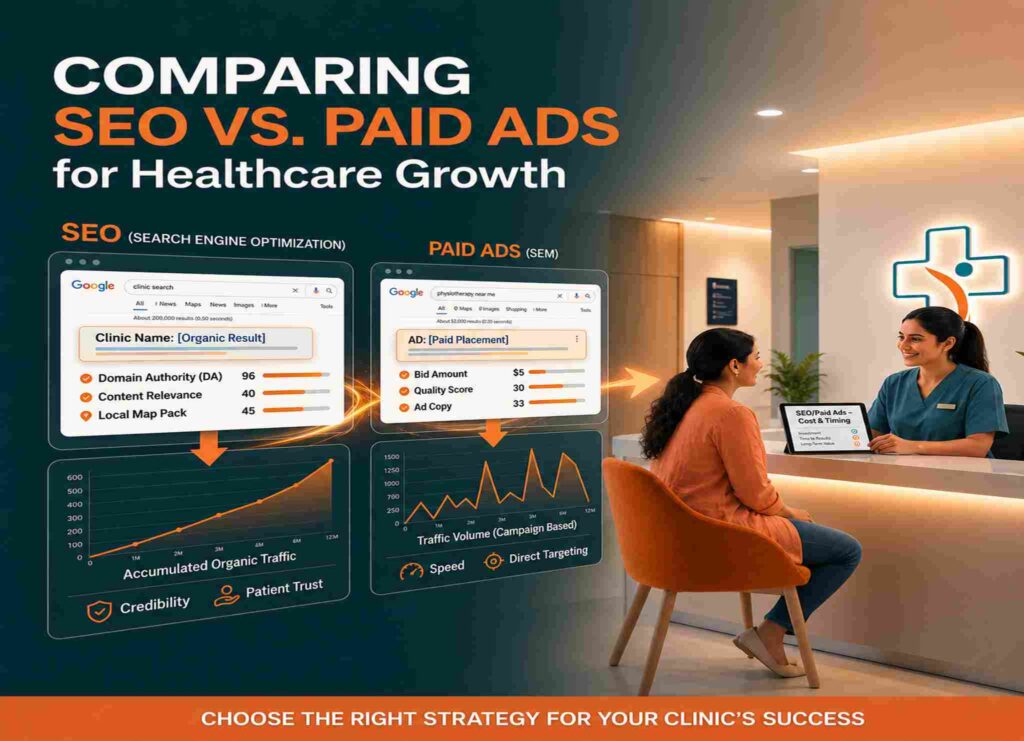
Healthcare businesses increasingly use digital marketing to improve online visibility and help patients access healthcare information more easily. Understanding the Difference Between SEO and Paid Ads for Healthcare Businesses is important because both strategies work differently and support different marketing goals. SEO focuses on improving a healthcare website’s visibility in unpaid search results through content optimization, technical website improvements, local SEO, and better user experience.
Paid Ads provide immediate visibility by displaying sponsored advertisements on search engines and online platforms. While SEO usually supports long-term online growth and organic traffic, Paid Ads can help generate quicker visibility and targeted reach. The Difference Between SEO and Paid Ads for Healthcare Businesses also includes factors such as cost, sustainability, competition, and the time required to achieve measurable online engagement and website traffic.
What Is SEO in Healthcare Marketing?
SEO, or Search Engine Optimization, is the process of improving a healthcare website so it appears naturally in search engine results. The goal of SEO is to help websites rank higher when users search for healthcare-related services or information online. One major Difference Between SEO and Paid Ads for Healthcare Businesses is that SEO focuses on organic visibility instead of direct advertising payments.
Healthcare SEO commonly includes:
- Keyword optimization
- Website speed improvement
- Mobile-friendly design
- Local SEO optimization
- Google Business Profile management
- Educational healthcare content
- Technical website improvements
SEO usually takes time to produce results, but it can provide long-term online visibility.
What Are Paid Ads in Healthcare Marketing?
Paid Ads are online advertisements where healthcare businesses pay platforms such as search engines or social media websites to display advertisements to users. Another important Difference Between SEO and Paid Ads for Healthcare Businesses is that Paid Ads provide faster visibility compared to SEO.
Common forms of Paid Ads include:
- Search engine advertisements
- Display ads
- Social media promotions
- Video advertisements
- Remarketing campaigns
Healthcare businesses generally pay for clicks, impressions, or conversions depending on the advertising model being used.
Traffic Generation Methods
The Difference Between SEO and Paid Ads for Healthcare Businesses becomes very clear when comparing how website traffic is generated.
SEO Traffic
SEO generates traffic organically. Users find the website naturally through search engine rankings without the business paying for each visitor.
Paid Ads Traffic
Paid Ads generate traffic through sponsored placements. Healthcare businesses pay to display advertisements at the top of search results or across digital platforms.
SEO traffic may continue over time, while Paid Ads traffic usually stops once the advertising budget is paused.
Cost Structure Comparison
Another major Difference Between SEO and Paid Ads for Healthcare Businesses involves the cost model.
SEO Costs
SEO costs may include:
- Content development
- Technical optimization
- Website maintenance
- SEO management services
There is generally no direct payment for each click received through organic search results.
Paid Ads Costs
Paid Ads may involve:
- Cost-per-click payments
- Daily advertising budgets
- Campaign management expenses
- Keyword bidding competition
Healthcare-related keywords can sometimes become expensive due to high competition in the medical industry.
Time Needed for Results
The Difference Between SEO and Paid Ads for Healthcare Businesses also includes the time required to achieve visibility.
SEO Timeline
SEO is considered a long-term strategy. It may take weeks or months to achieve stronger rankings and noticeable traffic improvements.
Paid Ads Timeline
Paid Ads often produce immediate visibility once campaigns are launched. Healthcare businesses may start receiving traffic soon after advertisements go live. Because of this, Paid Ads are often used for faster online exposure.
Long-Term Sustainability
Long-term sustainability is another important Difference Between SEO and Paid Ads for Healthcare Businesses.
SEO Sustainability
SEO can continue bringing traffic even after optimization work has been completed, especially when strong rankings are maintained.
Paid Ads Sustainability
Paid Ads depend entirely on ongoing advertising budgets. When campaigns stop, website visibility and traffic may reduce quickly. This makes SEO more suitable for long-term growth strategies.
Trust and User Behavior
Users often view organic search results differently from advertisements. This creates another Difference Between SEO and Paid Ads for Healthcare Businesses.
SEO and Trust
Many users trust organic results because they appear naturally based on relevance and content quality.
Paid Ads and Visibility
Paid Ads provide strong visibility, especially for new healthcare services or awareness campaigns. However, some users may skip advertisements and focus more on organic listings. Both methods influence patient decision-making differently.
Targeting Capabilities
Audience targeting is another area where the Difference Between SEO and Paid Ads for Healthcare Businesses becomes noticeable.
SEO Targeting
SEO mainly targets users based on search intent and keyword relevance
Paid Ads Targeting
Paid Ads allow more precise targeting based on:
- Location
- Age group
- Device usage
- Interests
- Search behavior
- Demographic information
This targeting flexibility makes Paid Ads useful for specific healthcare campaigns.
Local Healthcare Visibility
Local online visibility is extremely important for healthcare providers because patients often search for nearby medical services.
SEO for Local Search
Healthcare SEO commonly focuses on:
- Local keywords
- Google Business Profile optimization
- Reviews and ratings
- Location-based content
Paid Ads for Local Reach
Paid Ads can instantly target nearby users using geographic settings and local audience filters.
This local visibility strategy is another Difference Between SEO and Paid Ads for Healthcare Businesses.
Role of Content
Content usage also highlights the Difference Between SEO and Paid Ads for Healthcare Businesses.
SEO Content
SEO relies heavily on detailed and informative content such as:
- Blogs
- Service pages
- Health awareness articles
- FAQs
- Educational resources
Paid Ads Content
Paid Ads generally use shorter content including:
- Headlines
- Ad descriptions
- Promotional text
- Landing page copy
SEO content is often more educational, while Paid Ads content is designed for quick engagement.
Competition Levels
Competition in healthcare digital marketing can affect both SEO and Paid Ads differently.
SEO Competition
SEO competition depends on:
- Website quality
- Content relevance
- Domain authority
- Technical optimization
Paid Ads Competition
Paid Ads competition depends on:
- Advertising budgets
- Keyword bids
- Campaign quality
- Audience targeting
The Difference Between SEO and Paid Ads for Healthcare Businesses includes how competition impacts visibility and costs.
Performance Tracking
Both strategies allow healthcare businesses to monitor digital marketing performance.
SEO Tracking Metrics
SEO performance may include:
- Organic traffic
- Keyword rankings
- Website engagement
- Local search visibility
Paid Ads Tracking Metrics
Paid Ads performance may include:
- Click-through rates
- Conversion rates
- Cost-per-click
- Ad impressions
- Return on advertising spend
Tracking helps businesses improve campaign effectiveness over time.
Which Strategy Is Better?
The Difference Between SEO and Paid Ads for Healthcare Businesses does not mean one strategy is always better than the other. The right choice depends on business goals, competition, budget, and marketing priorities.
SEO May Be Suitable For:
- Long-term visibility
- Sustainable traffic growth
- Educational healthcare marketing
- Building website authority
Paid Ads May Be Suitable For:
- Immediate traffic
- Service launches
- Awareness campaigns
- Faster lead generation
Many healthcare businesses combine both methods for balanced digital marketing results.
Combining SEO and Paid Ads
Some healthcare businesses use both SEO and Paid Ads together to improve overall online performance.
For example:
- Paid Ads can generate immediate website traffic
- SEO can support long-term visibility
- SEO content can strengthen landing pages
- Paid Ads can help test keywords for SEO strategies
Using both approaches together can create a more stable and diversified marketing strategy.
Conclusion
The Difference Between SEO and Paid Ads for Healthcare Businesses mainly involves traffic generation methods, timelines, costs, targeting capabilities, and long-term sustainability. SEO focuses on building organic visibility through optimization and educational content, while Paid Ads provide faster exposure through paid advertising campaigns.
Healthcare businesses often evaluate their goals, competition level, budget, and patient reach requirements before deciding which strategy to prioritize. In many cases, combining SEO and Paid Ads may help create both immediate visibility and long-term online growth. Healthcare businesses looking for digital growth strategies can explore useful healthcare digital marketing insights on Hubspot Blogs

